
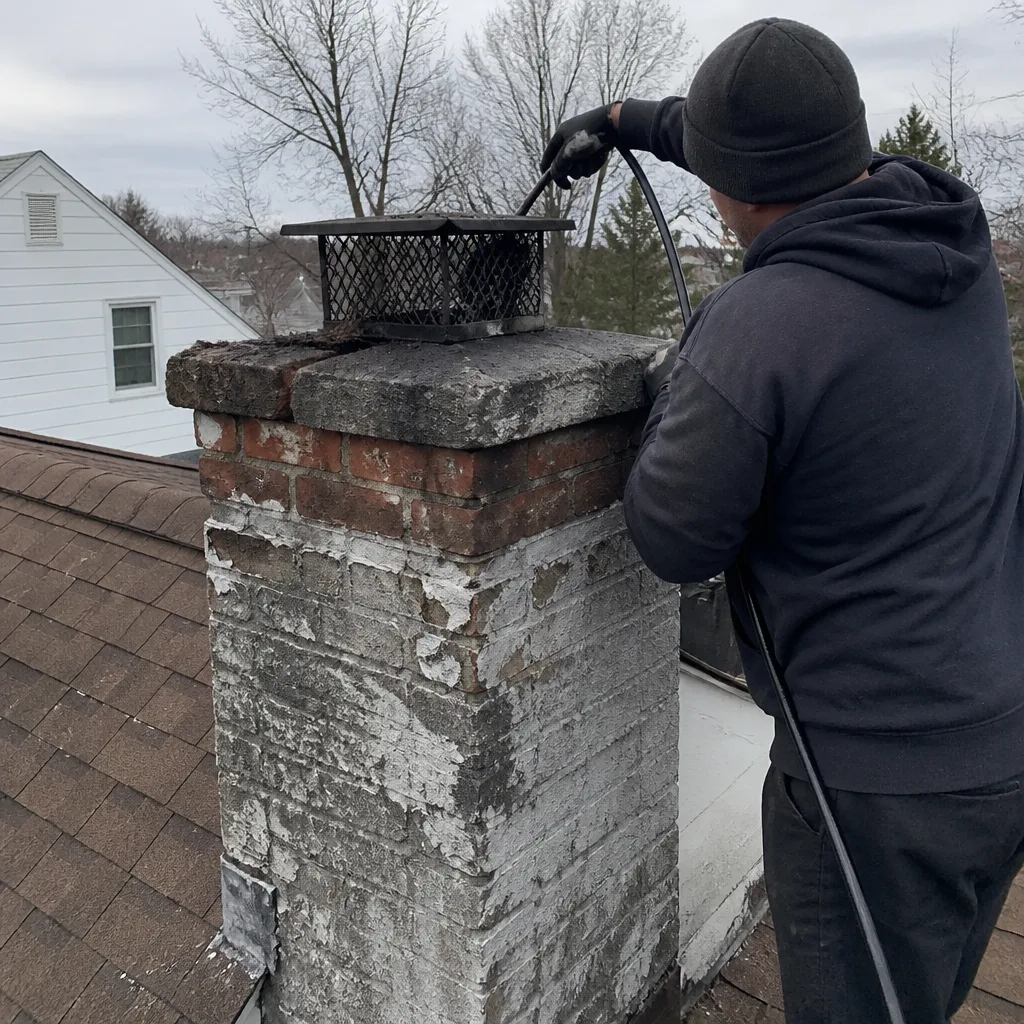
Level 1 sweep and inspection to the NFPA 211 annual standard - flue, crown, cap, and flashing checked and photographed
Chimney sweep logs do not sweep chimneys. They loosen some creosote - which then falls where a brush and vacuum still have to collect it.
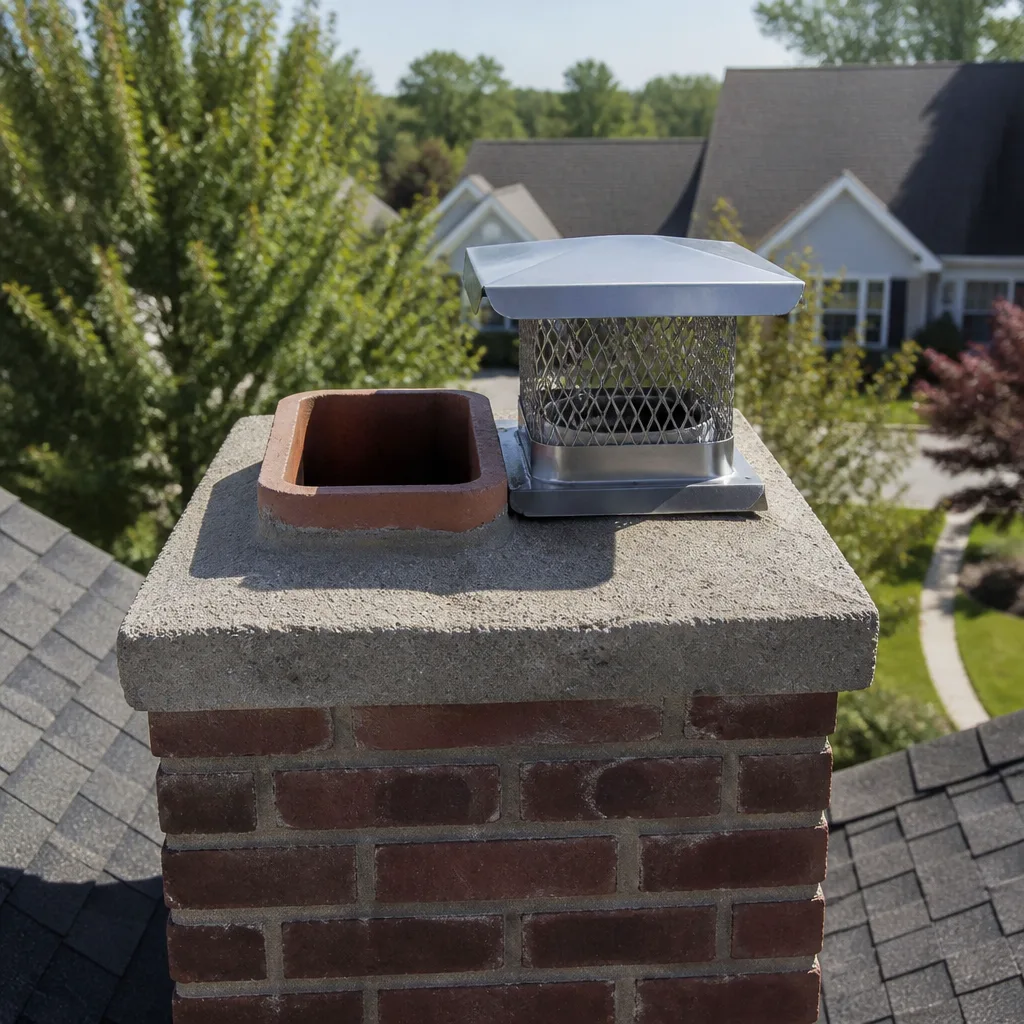
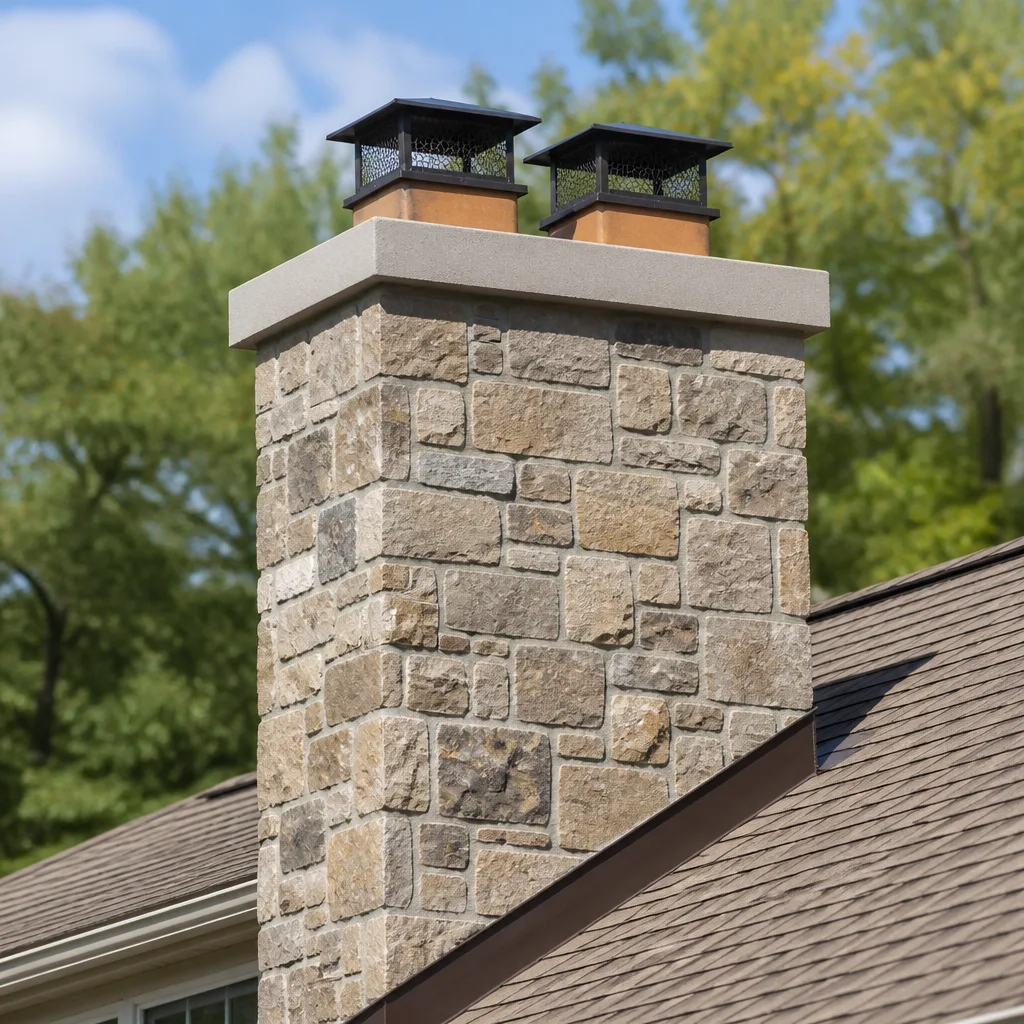
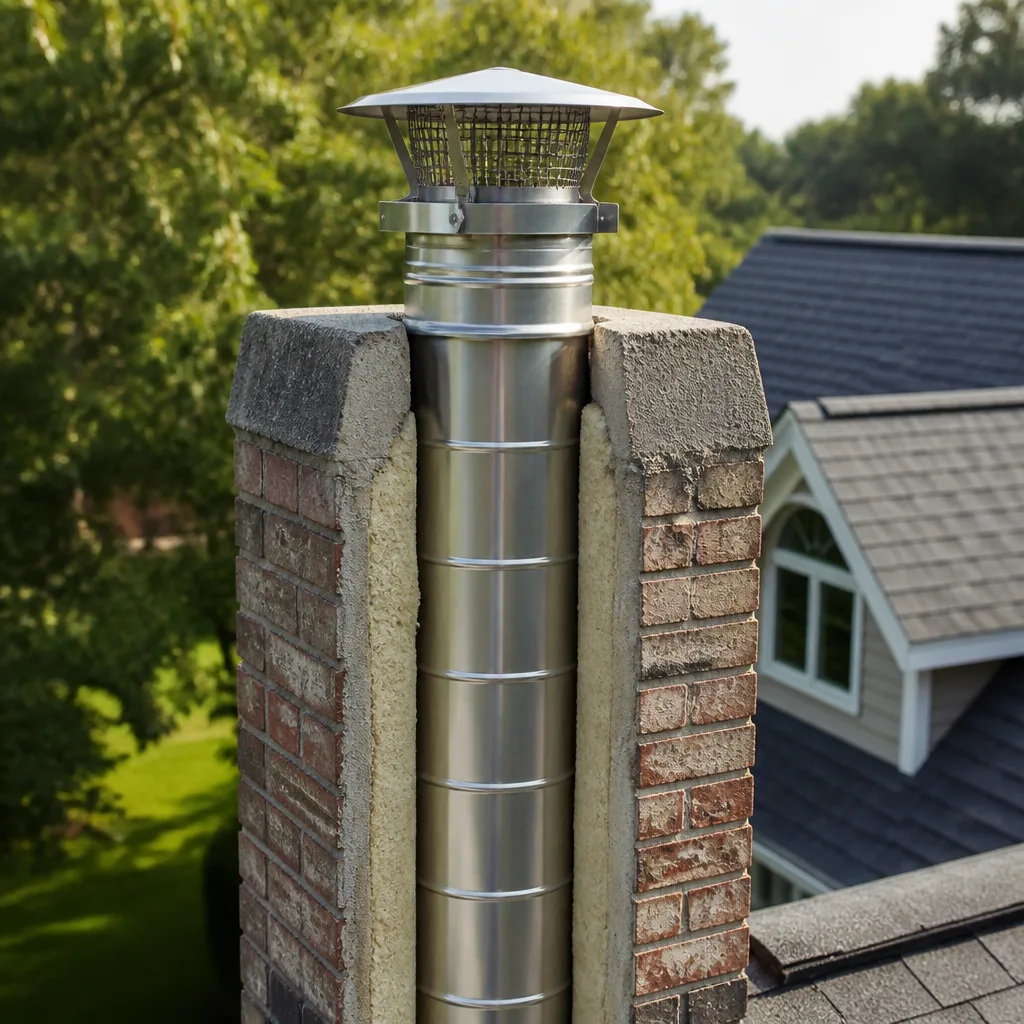
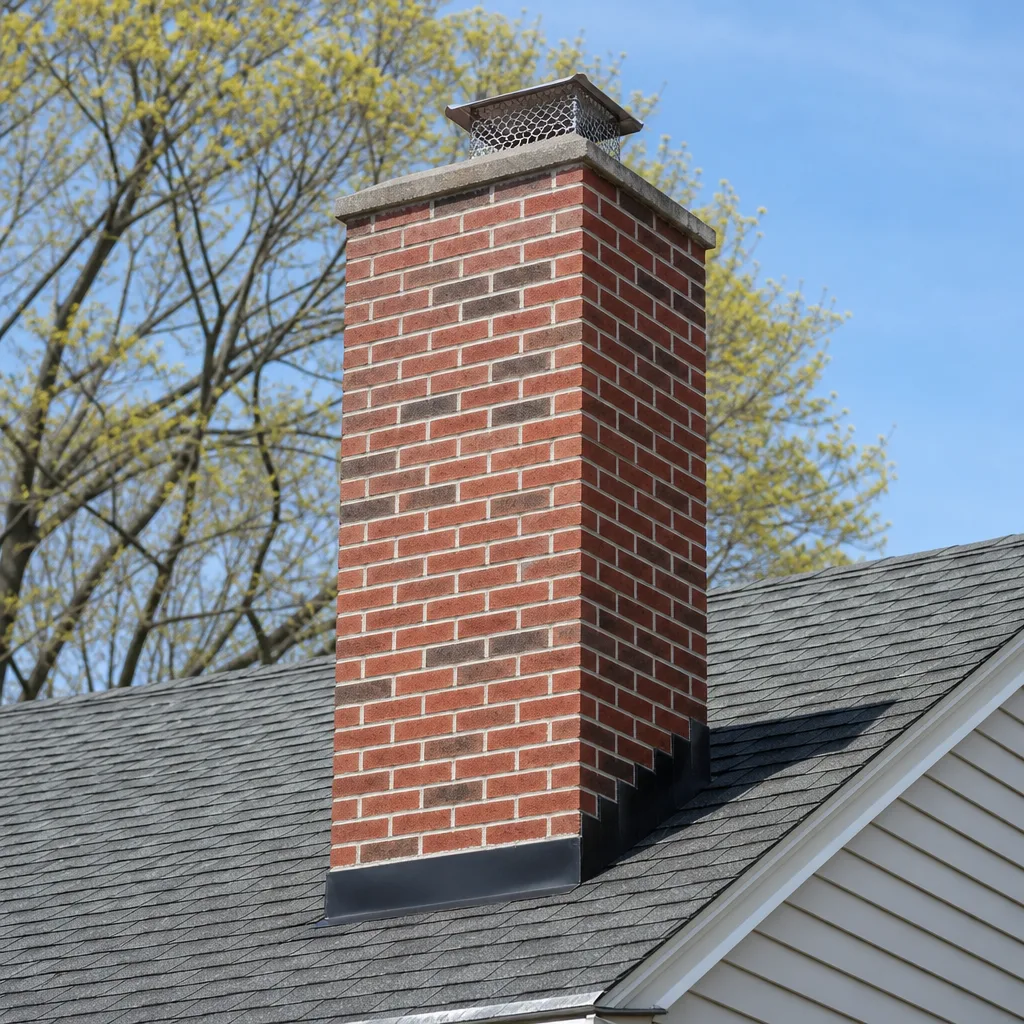
 Before
 After
After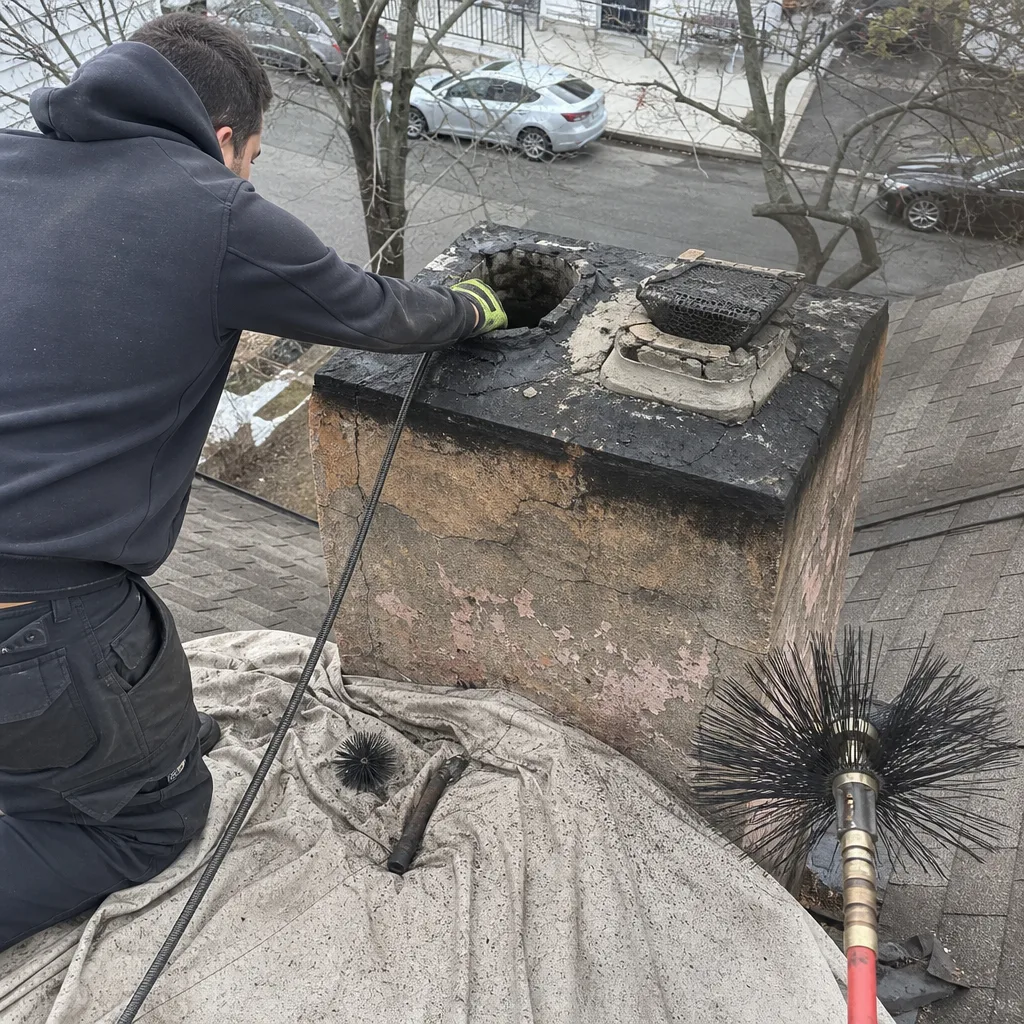 Before
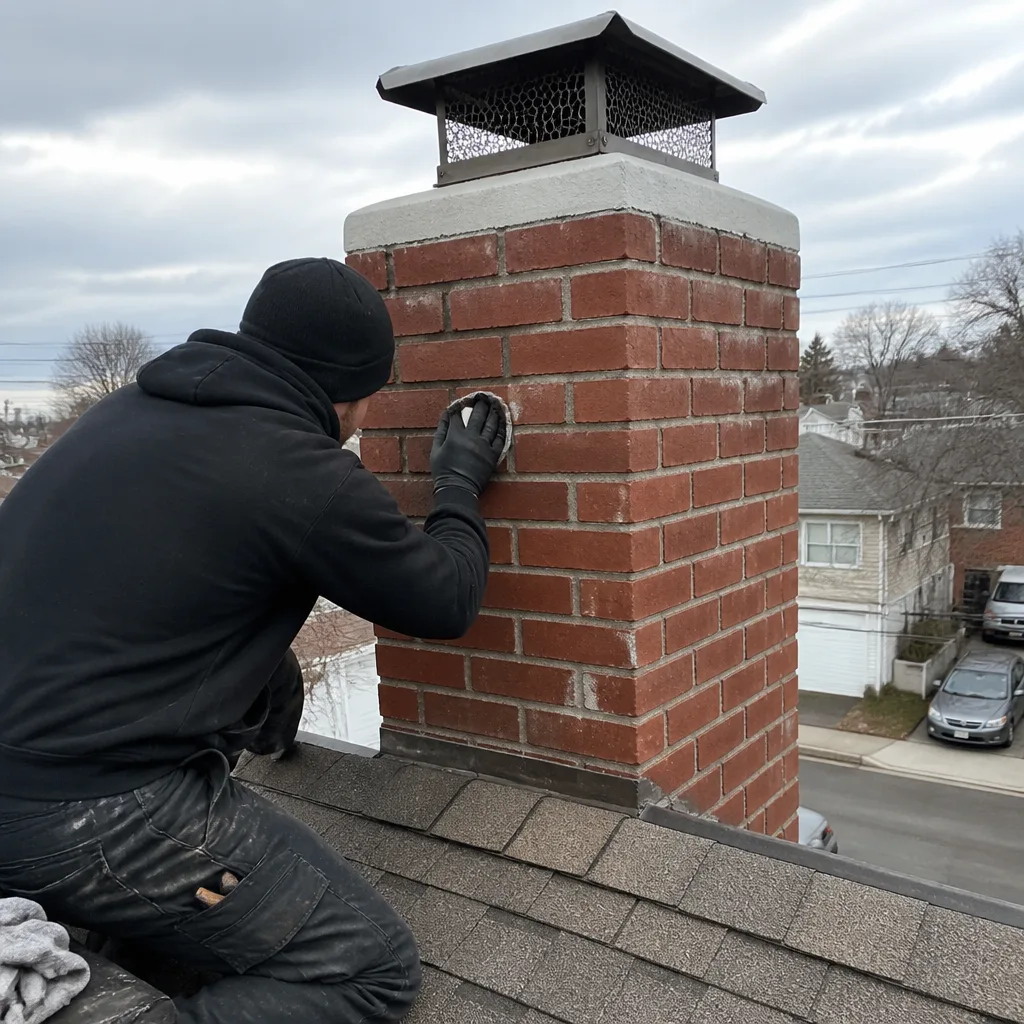 After
After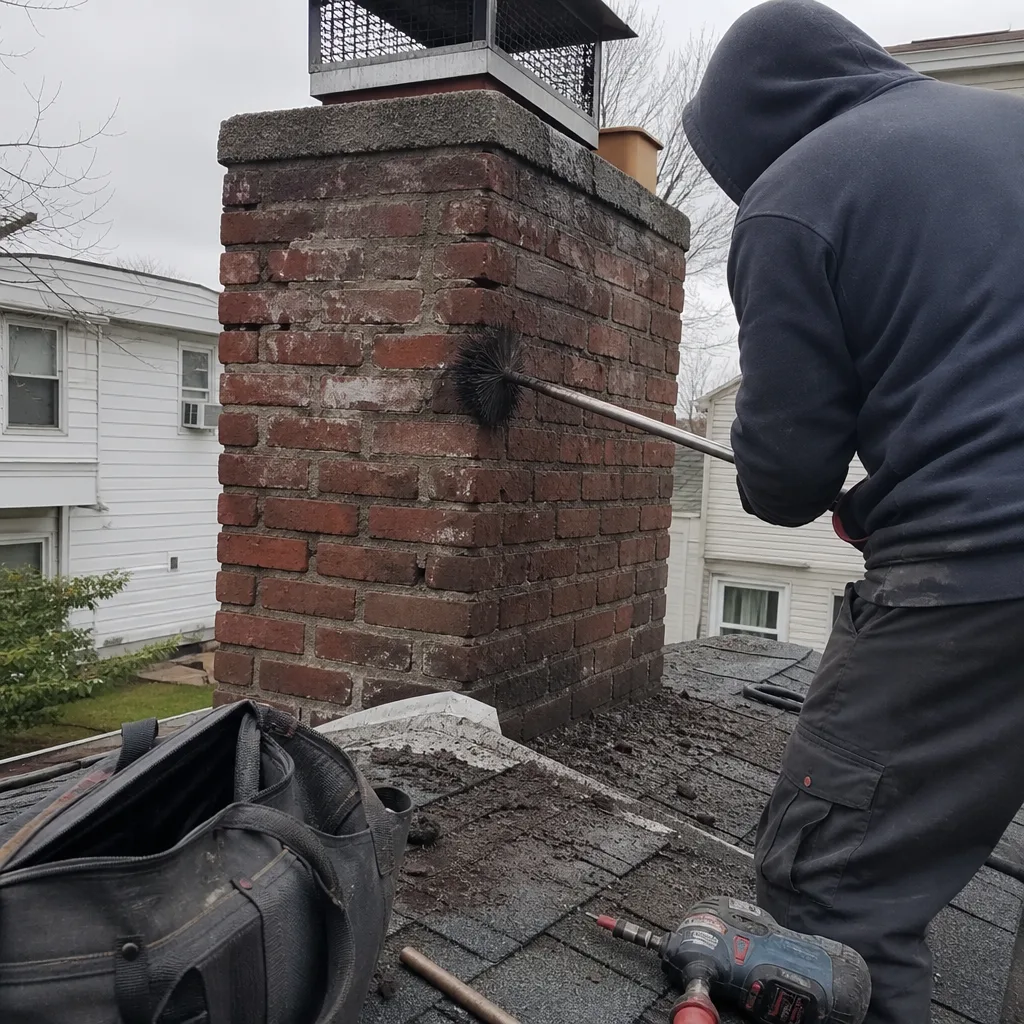 Before
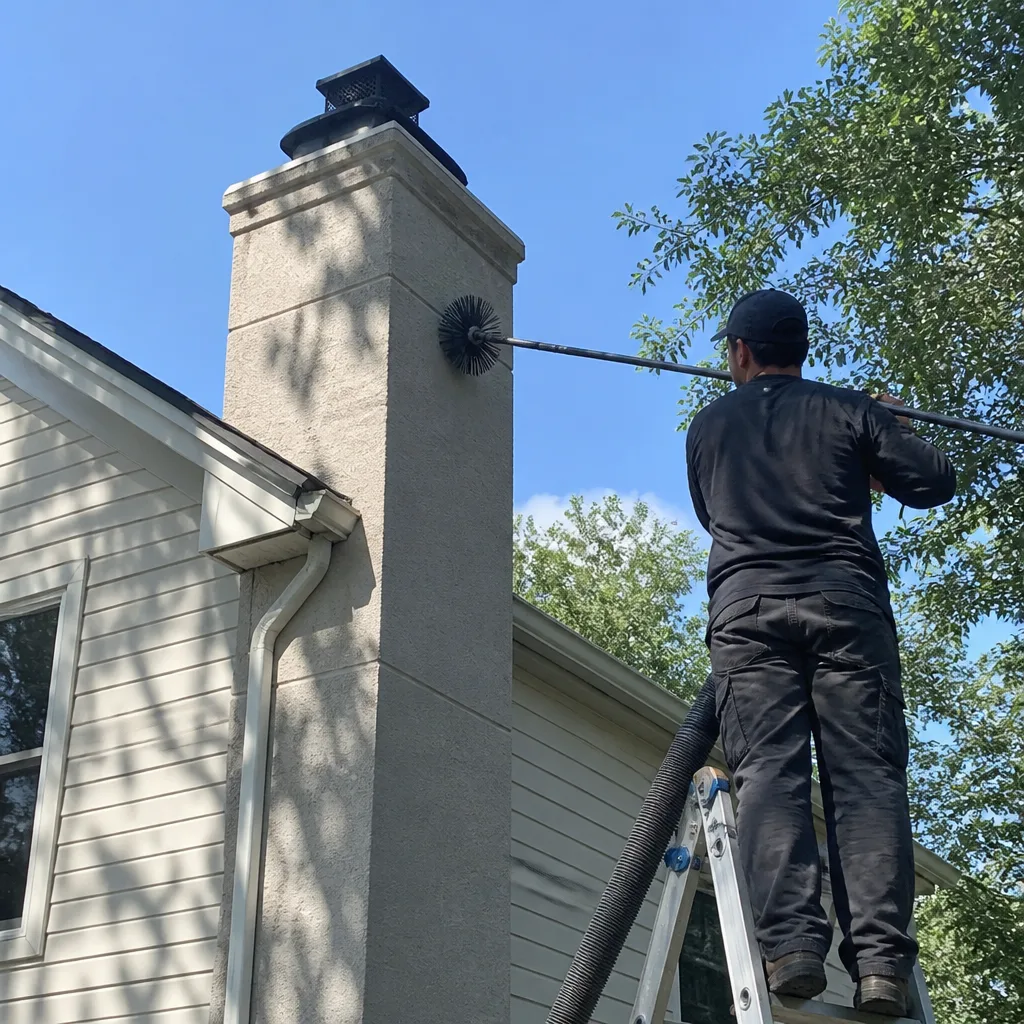 After
AfterCopperfield Flue Liner Replacement: The Staten Island Owner’s Guide
Copperfield flue liner replacement in Staten Island typically runs $1,800 to $3,400 for a full stainless steel reline, including removal of the damaged section, proper sizing, and professional installation. We stock Copperfield-compatible liners and connectors on our trucks, and most replacements are completed in a single day. Homeowners usually discover the problem during a sweep when our camera finds cracked tiles, separated joints, or corrosion scaling that wasn’t visible from the firebox.
In Staten Island’s salt-air climate, especially in shoreline neighborhoods like Tottenville and Great Kills, we’ve noticed Copperfield liners in older masonry chimneys deteriorate faster than manufacturer specs suggest. The freeze-thaw cycling through our winters opens hairline cracks that coastal moisture then widens. Russell Haines, our owner, has seen this pattern enough times to spot it early - and to know when a liner still has seasons left in it.
Which Copperfield Models This Applies To
Copperfield produces several liner series, and matching the right replacement matters for both safety and warranty coverage. The most common we encounter in Staten Island homes are the Copperfield 316Ti flexible stainless liners (for wood-burning applications), the 304 alloy economy line (often found in builder-installed systems from the 1990s), and the rigid 316L series used in some oil-to-gas conversions. The model designation is stamped on the top collar or termination cap, usually visible with a flashlight from the roof. If the tag is corroded, we measure the inner diameter at three points - top, middle, and base - since ovalization from thermal stress is common in chimneys with offset flues.
We are an independent service provider, not affiliated with Copperfield. For most Staten Island replacements, we install OEM-equivalent 316Ti flexible liners that meet the same UL 1777 standard as factory Copperfield products, often at lower cost with identical performance. The exception is when your appliance warranty explicitly requires factory-branded components; we’ll verify that before quoting. One compatibility gotcha: Copperfield’s older 304-series couplings don’t mate properly with current 316Ti collars, so mixing generations creates a leak point we refuse to install.
Signs Your Copperfield Flue Liner Replacement Is Failing
- White efflorescence or powder on the firebox walls. This means flue gases are condensing and migrating through liner cracks, depositing acidic residue. In Staten Island’s humid summers, we see this accelerate once the liner’s protective oxide layer breaches.
- Bits of clay tile in the firebox or cleanout. If your chimney was originally clay-lined and later retrofitted with Copperfield, falling tile indicates the original liner is collapsing onto the stainless insert, creating blockage and abrasion damage.
- Smoke odor in upstairs rooms when the fireplace isn’t in use. This signals a separation at a liner joint, often where the flexible section meets the rigid connector. Negative pressure in modern Staten Island homes pulls leaked gases into living spaces.
- Rust streaks on the exterior masonry below the crown. Stainless steel shouldn’t rust externally; these streaks mean exhaust is escaping the liner and condensing inside the chimney structure, carrying dissolved minerals through the brick.
- The appliance struggles to draft despite a clear flue. A liner that’s undersized due to interior scaling, or one that has ovalized or separated from the appliance collar, creates turbulence that kills proper draw. We’ve measured 6-inch liners that drafted like 4-inch pipes after years of creosote buildup behind a failing liner wall.
Replacement Cost & What’s Included
For Staten Island homes, Copperfield-compatible flue liner replacement breaks down as follows:
| Component | Price Range |
|---|---|
| 316Ti flexible stainless liner (materials only) | $800 - $1,600 |
| Rigid connector, top plate, and termination | $250 - $450 |
| Labor: removal, installation, insulation wrap | $650 - $1,200 |
| Level-2 camera inspection and photo report | Included |
| Total installed replacement | $1,800 - $3,400 |
What drives the range: chimney height (a three-story Tottenville colonial vs. a one-story ranch in New Dorp), accessibility for our equipment, and whether the existing liner can be extracted intact or must be demolished in place. We quote the full number before any work begins - no surprises on the bill. Every liner we install carries the 90-Day Done Right Promise in writing: if it’s not right, we come back, no arguing. We also apply our standing 5% senior and veteran discount to all liner work.
DIY or Call Us?
There’s a short, honest list of what a Staten Island homeowner can safely check: confirm the appliance model number, look for visible corrosion on the termination cap from the ground (don’t climb), and note any symptoms from our list above. That’s where safe DIY ends.
Flue liner replacement involves working at height on a pitched roof, handling sharp stainless edges, and properly insulating the liner to maintain clearances to combustibles - a mistake here voids your homeowner’s insurance if fire follows. More critically, an improperly sized or sealed liner can vent carbon monoxide into living spaces without any visible warning. We’ve found DIY liner jobs in Staten Island where the homeowner used automotive exhaust clamps instead of proper liner bands, creating a gap that leaked for two heating seasons before we caught it.
Our background-checked, uniformed technicians carry the right Copperfield-compatible inventory and complete most liner replacements in a single visit. Call (516) 613-3035 for a free estimate - we’ll show you the camera footage, explain what we found, and quote a number that doesn’t change.
FAQs
A properly installed 316Ti stainless liner should last 15 to 20 years, but we’ve seen Staten Island installations fail in 10 when subjected to our coastal moisture cycles and aggressive creosote from unseasoned firewood. Annual inspection catches problems before they shorten lifespan further. Call (516) 613-3035 to schedule - estimates are free.
Localized damage sometimes qualifies for HeatShield cerfractory resurfacing or a stainless steel sleeve insert, but only if the original liner retains structural integrity and the damage is accessible. If the liner has separated joints, widespread corrosion, or ovalization exceeding 10%, replacement is the only code-compliant option. We document this with photos you can see before recommending either path.
Most Copperfield-compatible liner replacements take four to six hours from arrival to final camera verification. Complex jobs - tall chimneys, tight flues, or liners that must be demolished in place - may extend to a full day. We complete most jobs in a single visit, and you’ll receive photos of the installed liner before we leave.
We stock Copperfield-compatible 316Ti flexible liners, connectors, and termination caps on our trucks in the most common Staten Island sizes: 5.5-inch, 6-inch, and 7-inch diameters. Less common sizes or rigid series may require a one-day order. We’ll confirm availability when you call (516) 613-3035 for your free estimate.
If the chimney’s sound, we’ll say so. If it isn’t, you’ll hear that too.
Written by Russell Haines, Owner, Hearthstone Chimney Co. at Hearthstone Chimney Co., serving Staten Island and nearby areas.