
Last updated September 10, 2026
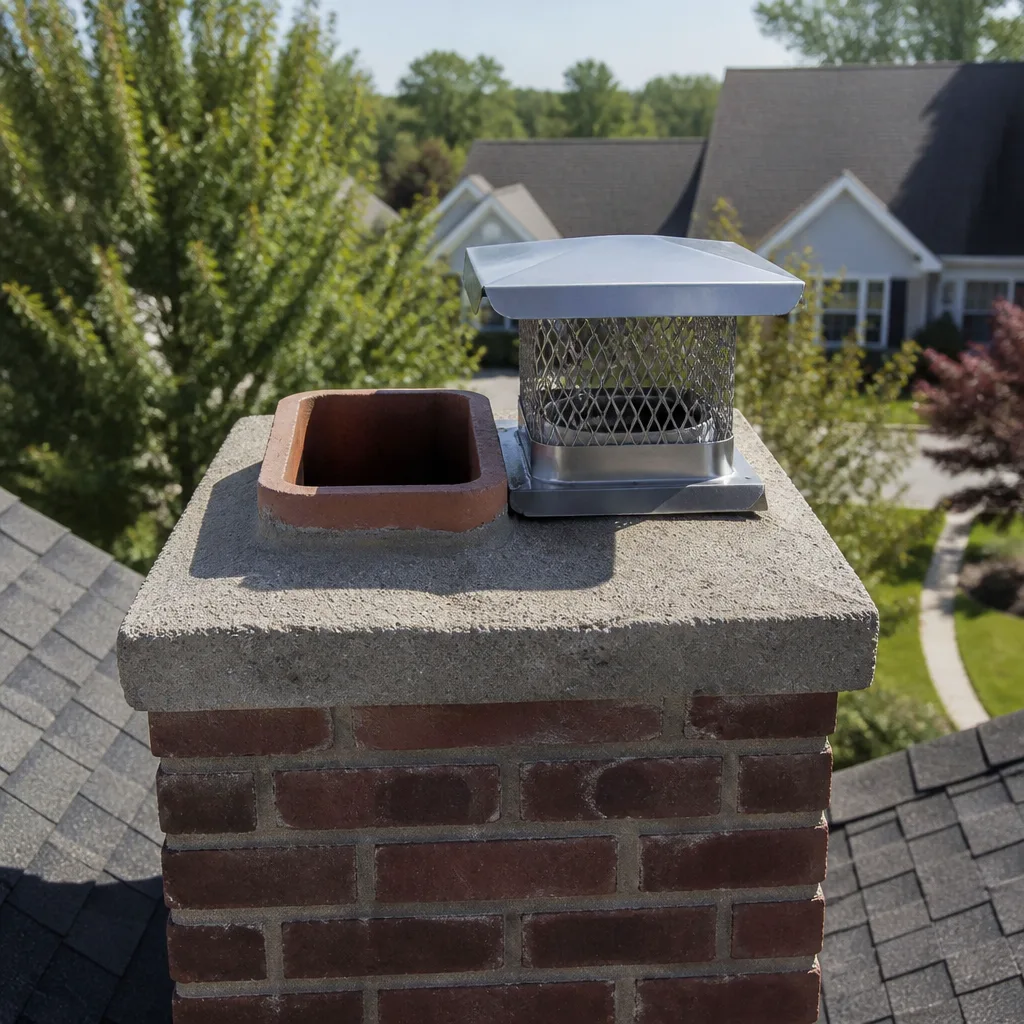
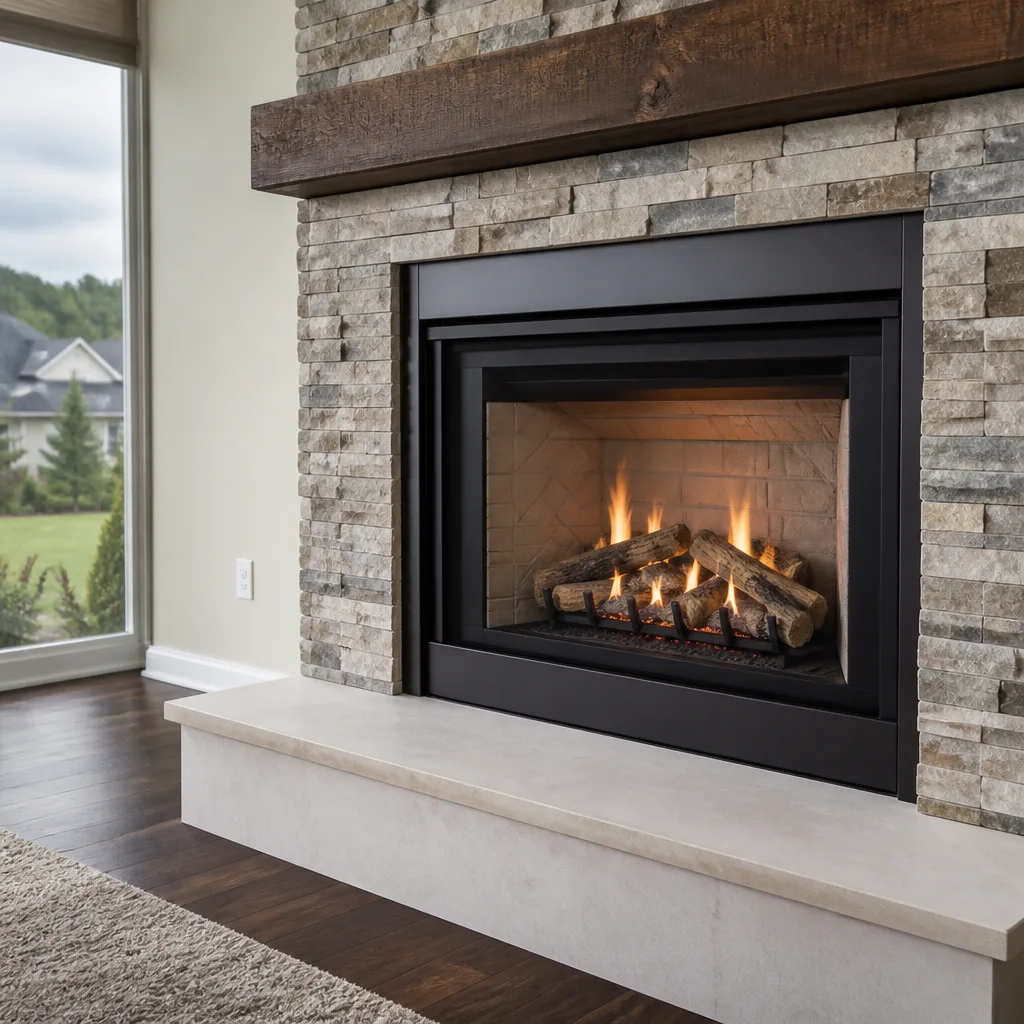
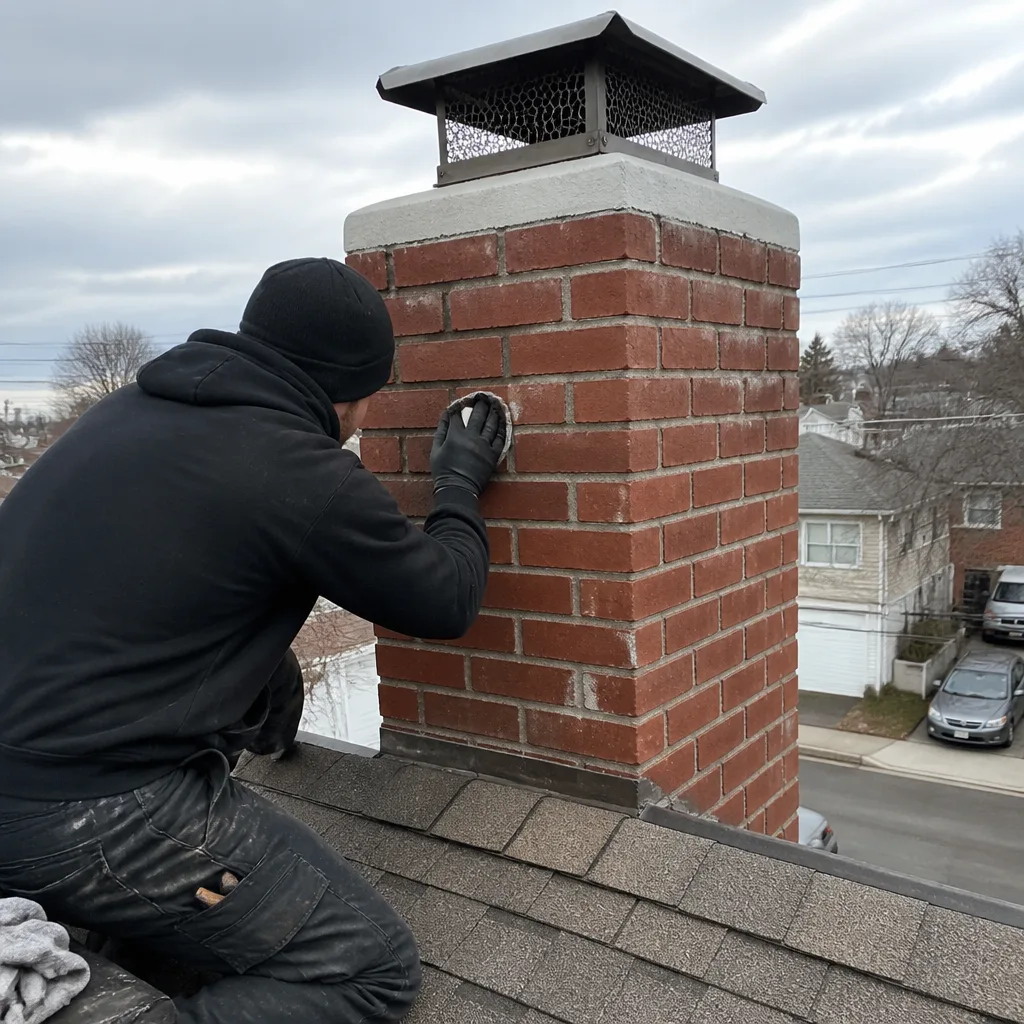
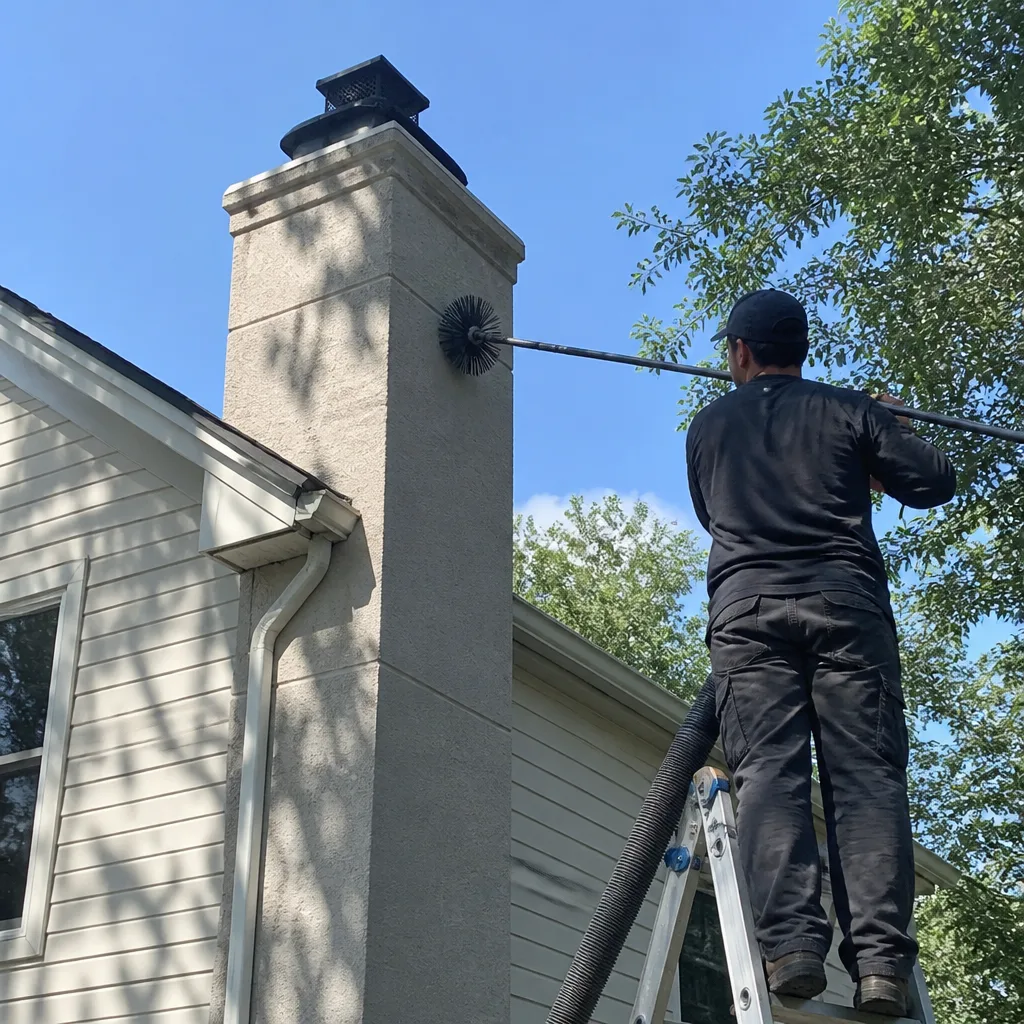
Level 1 sweep and inspection to the NFPA 211 annual standard - flue, crown, cap, and flashing checked and photographed
Chimney sweep logs do not sweep chimneys. They loosen some creosote - which then falls where a brush and vacuum still have to collect it.
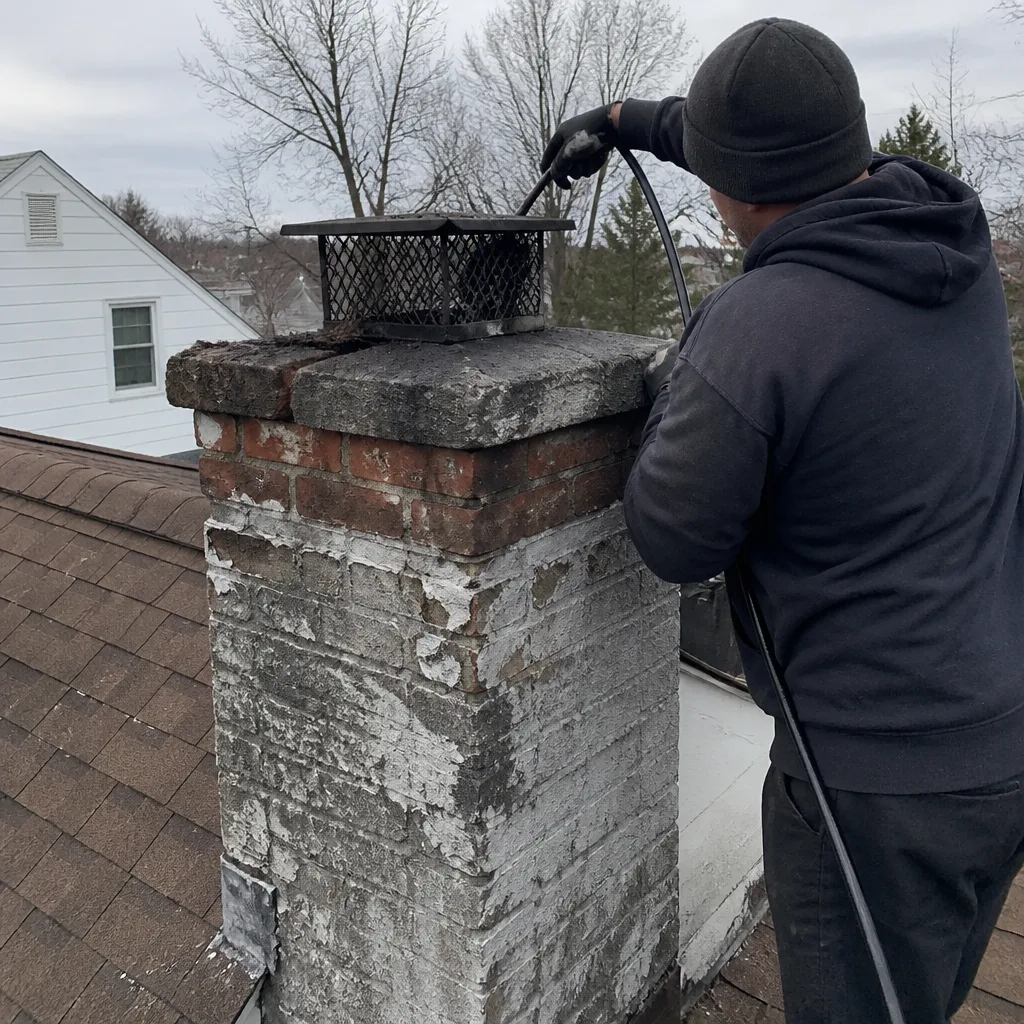 Before
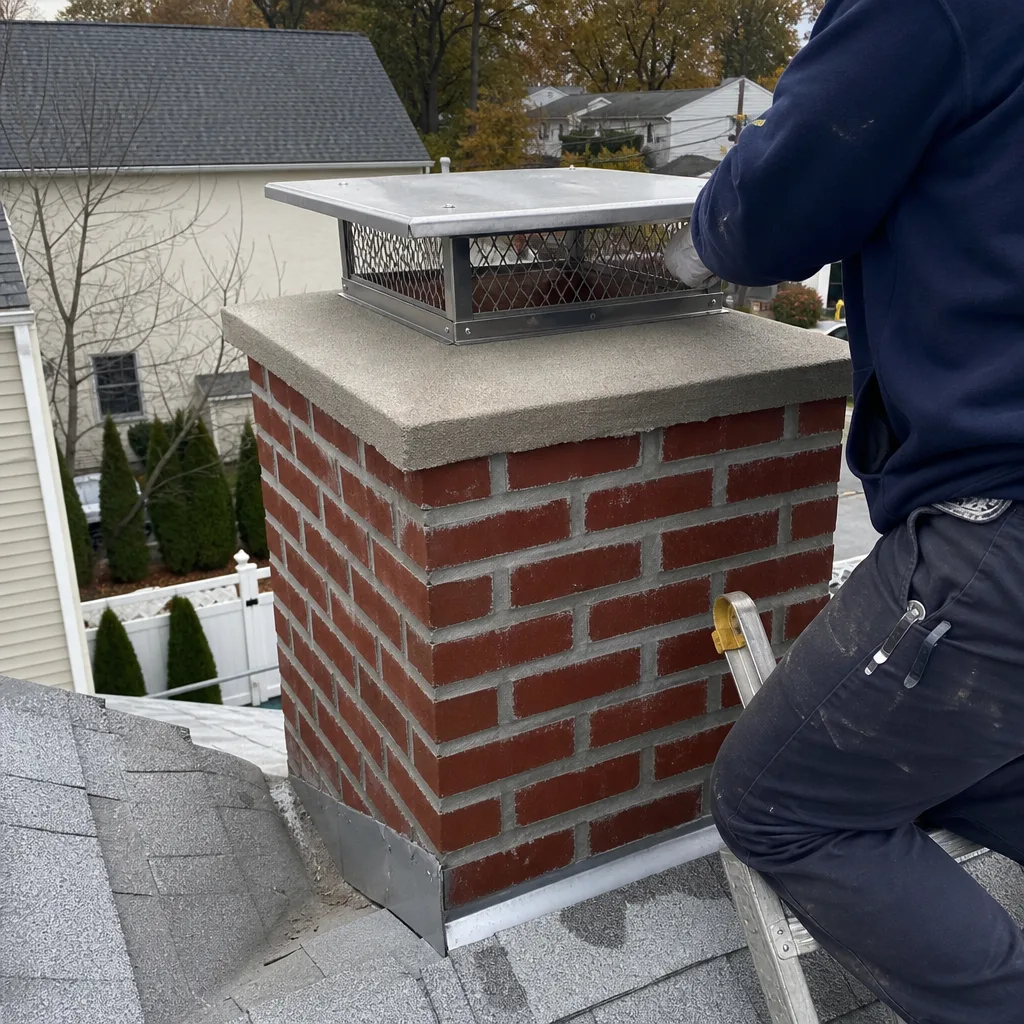 After
After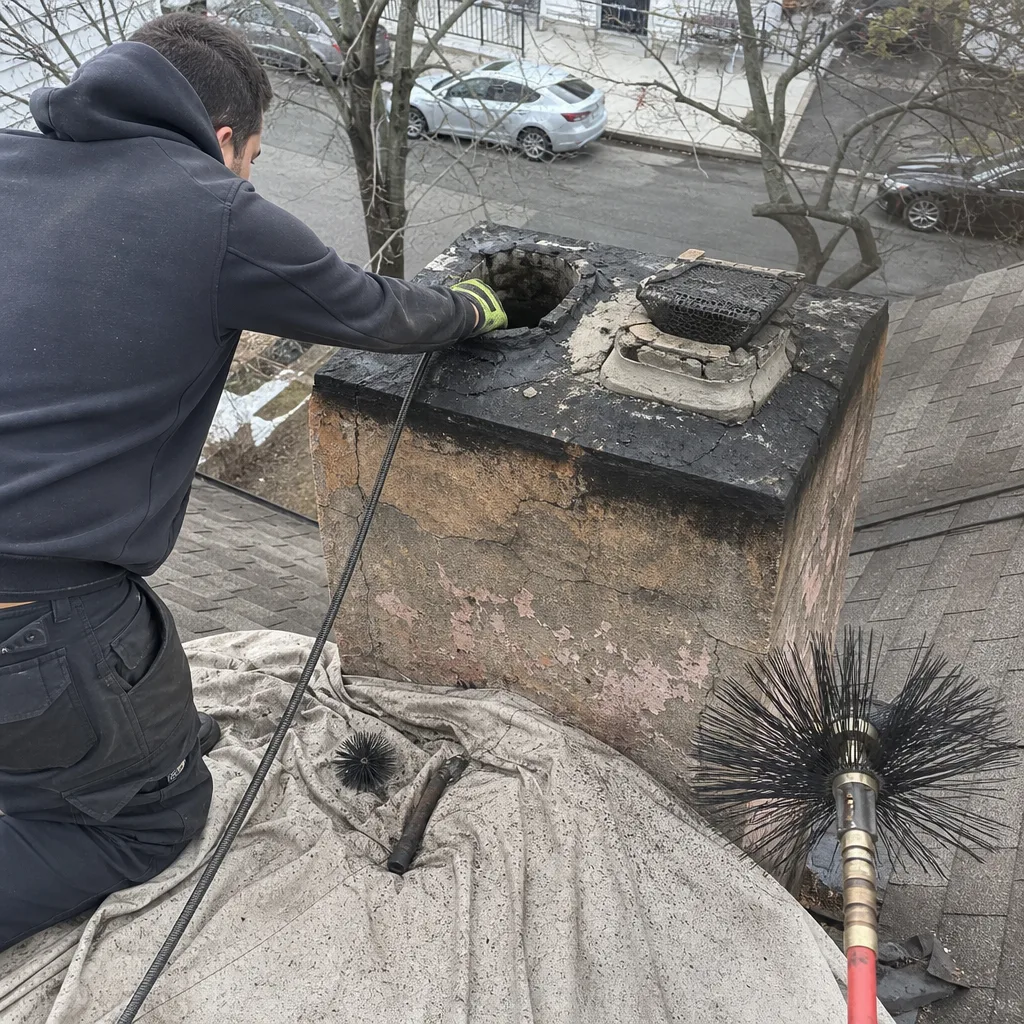 Before
 After
After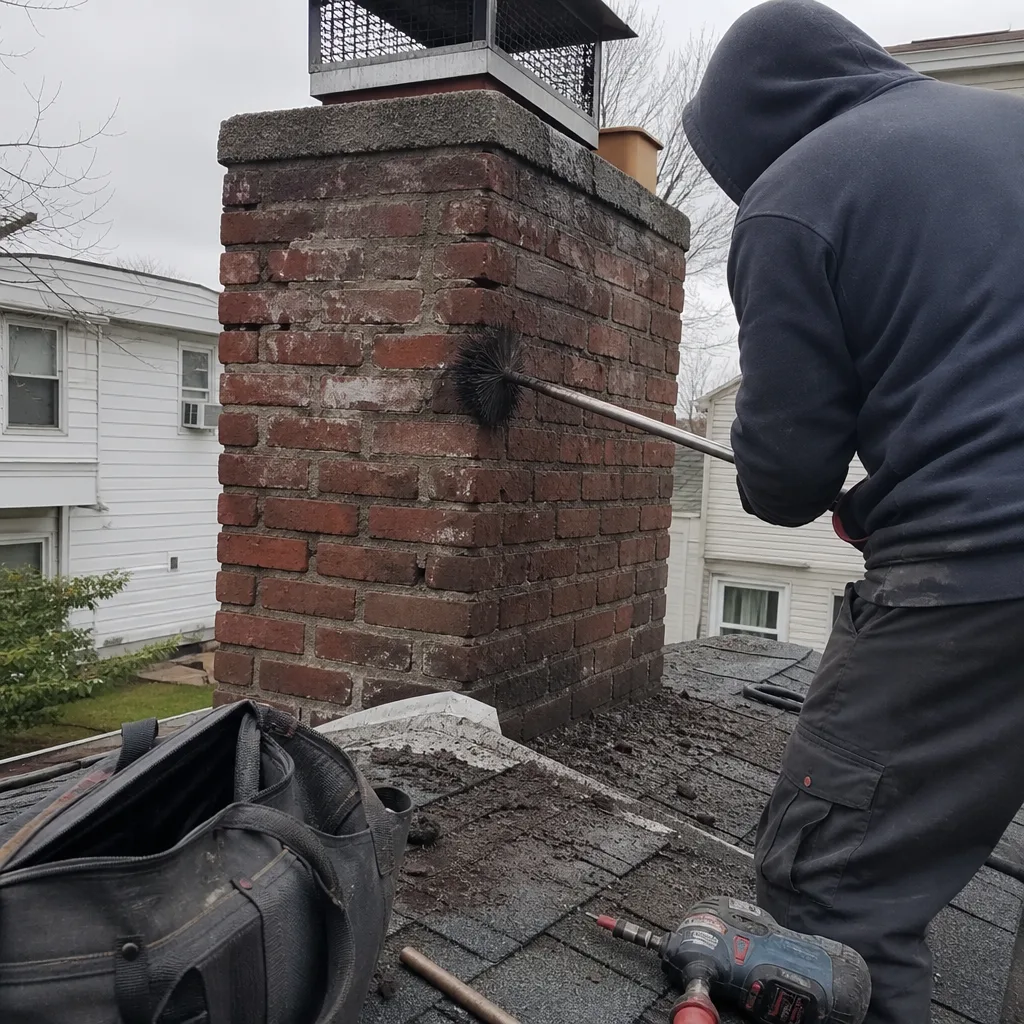 Before
 After
AfterChimney Cleaning Warning Signs: A Staten Island Homeowner’s Reference Guide
The white staining on your chimney’s exterior brickwork isn’t a cosmetic issue - it’s efflorescence, and it’s telling you that water has been moving through your mortar joints long enough to carry mineral deposits to the surface. By the time you can see it from the ground, the damage behind it is already done. Most chimney warning signs are visible or smellable to any homeowner who knows what they’re looking for, but the signs people notice first are often late-stage indicators of a problem that started months earlier and much harder to see. This guide works backward from the obvious signs to teach you how to catch the early ones, with specific attention to Staten Island’s coastal climate, freeze-thaw cycles, and the housing stock we service from Tottenville to St. George. For a deeper dive into prevention, see The Complete Guide to Chimney Cleaning in Staten Island.
Quick Answer
Chimney warning signs fall into three categories: performance issues (smoke backing up, weak draft, odd smells), visible exterior damage (efflorescence, spalling brick, cracked mortar), and hidden interior deterioration (firebox cracks, damper corrosion, debris on the smoke shelf). If you smell sharp, chemical smoke when the fireplace is not in use, see white or gray mineral staining on exterior brick, or notice your fireplace smoking into the room on calm days, stop using the system and schedule a Level-2 camera inspection. Most of these conditions worsen silently through Staten Island’s wet winters and humid summers, making annual inspection the single most reliable early warning system.
Table of Contents
- Exterior Warning Signs: Reading Your Chimney from the Ground
- Smell Decoded: Creosote, Water, and When to Stop Using the Fireplace
- Draft Problems: Three Different Causes, Three Different Fixes
- Interior Warning Signs Homeowners Never Check
- Safety Emergency vs. Scheduled Repair: A Plain Framework
- How Staten Island’s Climate Accelerates Chimney Damage
- What a Proper Annual Inspection Actually Covers
- Common Mistakes to Avoid
- When to Call a Professional
- Frequently Asked Questions
- The Bottom Line
Exterior Warning Signs: Reading Your Chimney from the Ground
We start outside because that’s where most homeowners look first, and because exterior damage often signals interior problems that have been developing for two or more burning seasons. In our 42 years serving Staten Island, we’ve learned that the borough’s coastal exposure - salt air from the Arthur Kill and Raritan Bay, combined with freeze-thaw cycles that can swing 40 degrees in a January week - produces a predictable pattern of exterior deterioration.
Efflorescence: The White Stain That Means Water Is Moving
Efflorescence appears as white, gray, or yellowish powder on brick or mortar surfaces. It’s not paint, it’s not pollution, and it won’t wash off with a hose. The stain is salt and mineral deposits left behind when water moves through porous masonry, dissolves soluble compounds, and evaporates at the surface.
Here’s what matters: efflorescence means water is getting in, moving through the masonry, and getting out. In a properly constructed and maintained chimney, the masonry should be dry enough that this process doesn’t occur. When we see efflorescence on Staten Island chimneys - particularly on homes in Dongan Hills, New Dorp, and other neighborhoods with 1920s-1950s brick construction - we know to check for three underlying causes:
- Failed or missing chimney crown allowing water to saturate the top courses of brick
- Deteriorated mortar joints that have lost their waterproofing integrity
- Interior flue liner cracks that allow moist combustion gases to condense inside the masonry
Efflorescence can be watched if it’s minor and localized to the top few feet of the chimney. It requires immediate attention if it extends below the roofline, appears on multiple faces, or is accompanied by spalling.
Spalling: When Brick Faces Pop Off
Spalling is the flaking, chipping, or complete loss of the outer surface of a brick. It happens when water enters the brick, freezes, and expands - the same process that creates Staten Island’s potholes every February. Once a brick face spalls, the inner material is exposed and deteriorates rapidly. We’ve replaced chimney sections in Westerleigh and Port Richmond where spalling had progressed so far that the structural integrity of the stack was compromised.
Spalling is never a watch-and-wait condition. It indicates active water intrusion and freeze damage, and it always worsens. The repair ranges from partial rebuild with matching brick to full chimney reconstruction, depending on extent.
Stair-Step Cracking in Mortar Joints
Cracks that follow the mortar joints in a stair-step pattern typically indicate settlement or thermal movement. In Staten Island’s older homes - and we work on many built before 1940 in neighborhoods like Stapleton and St. George - minor stair-step cracking near the roofline is often thermal expansion from decades of heating and cooling. Cracking that extends below the roofline, widens to more than one-quarter inch, or appears suddenly after a weather event suggests structural movement that needs evaluation.
Hairline cracks can be monitored. Anything you can fit a dime into needs professional assessment. Sudden widening or new cracking after a nor’easter or freeze event warrants prompt inspection.
Crown and Cap Damage
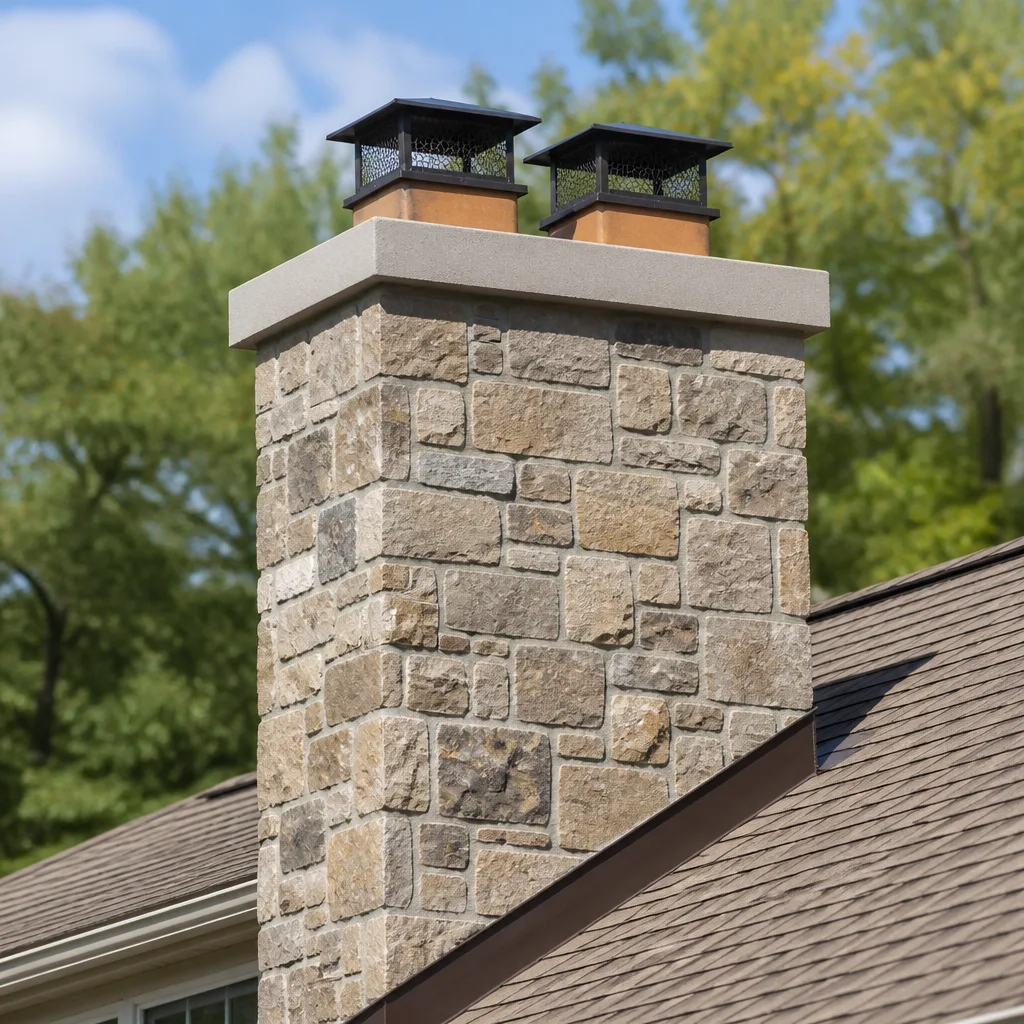
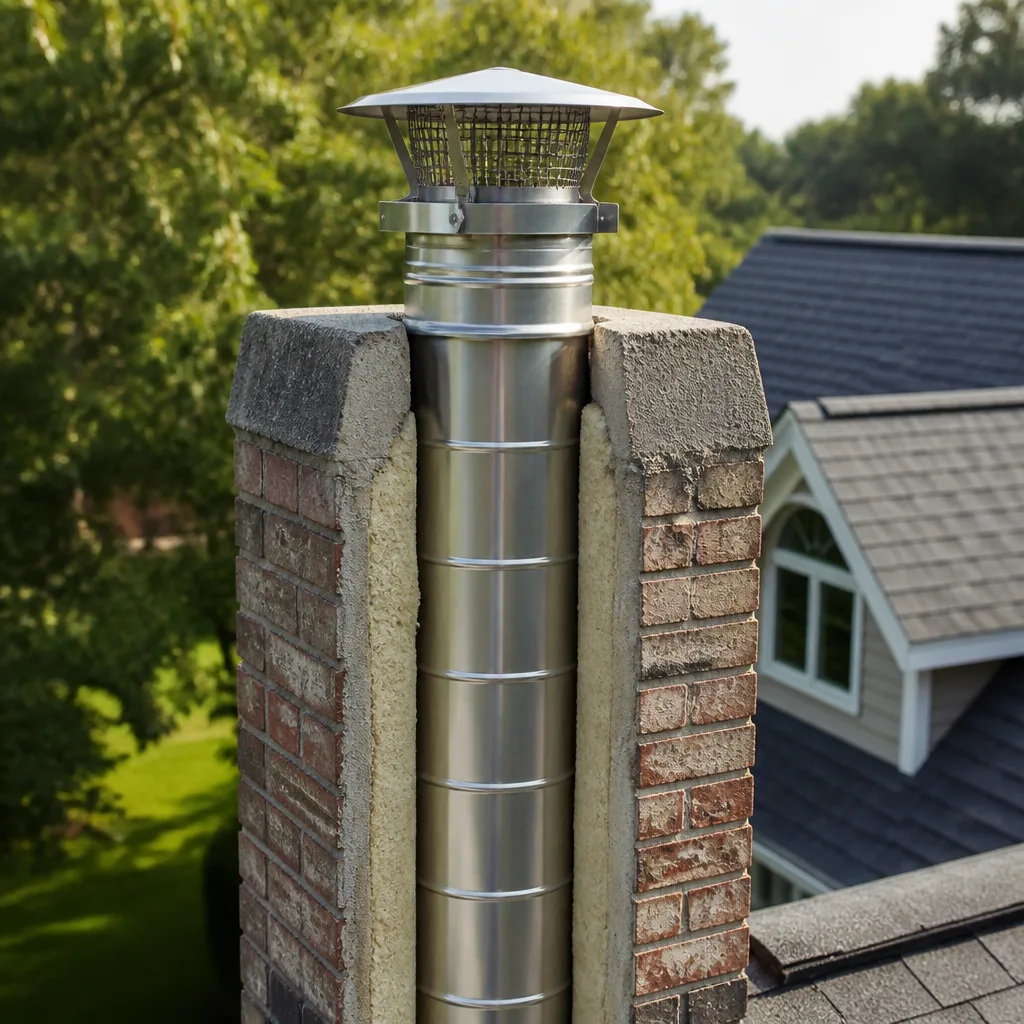
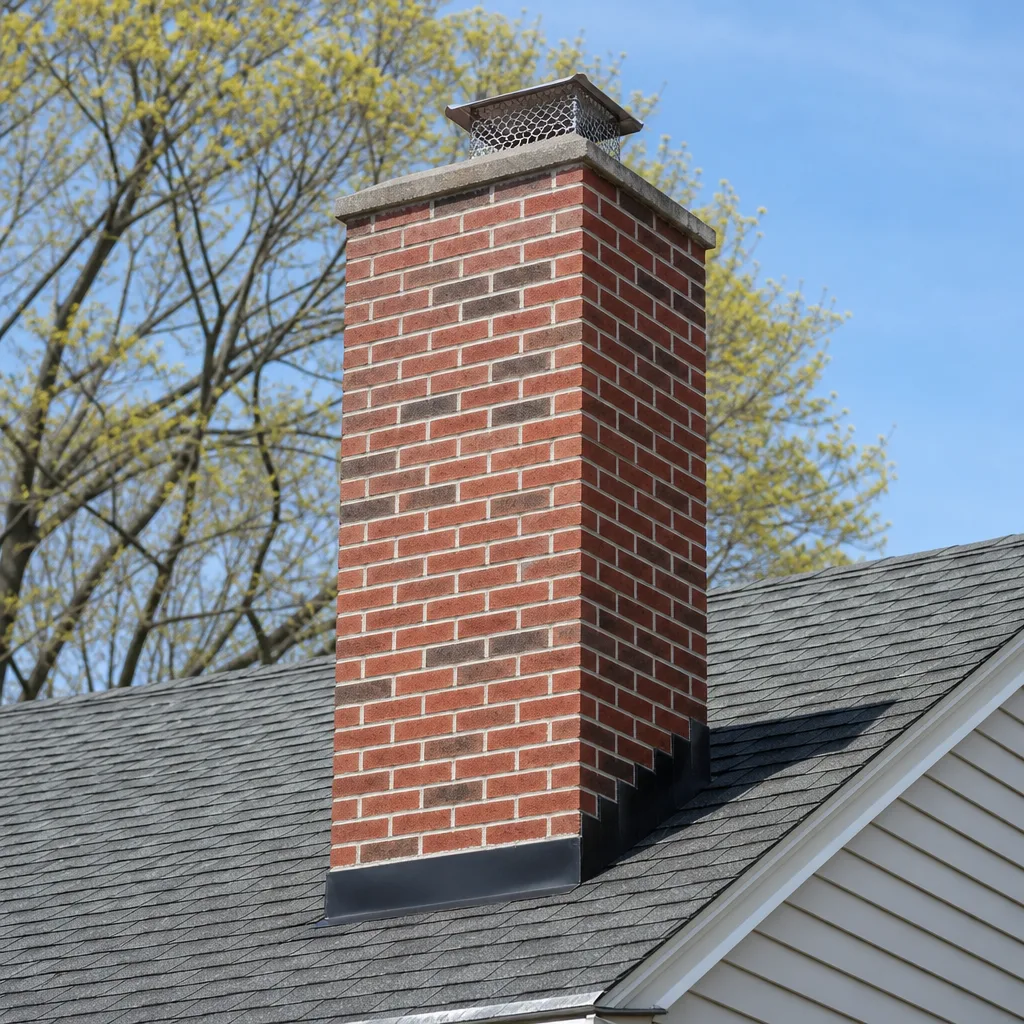
The chimney crown is the concrete or mortar wash that sheds water from the top of the chimney. The cap is the metal cover that protects the flue opening. Both fail predictably in our climate. A crown with hairline cracks will admit water within two to three seasons. A cap that has shifted or corroded - common with the galvanized steel caps installed in the 1970s and 1980s - allows direct water entry and animal access.
We install Gelco and Olympia Chimney caps with stainless steel construction and proper overhang to shed water beyond the brick face. The difference in service life between a big-box store cap and a professional-grade unit is fifteen to twenty years in Staten Island conditions.
Smell Decoded: Creosote, Water, and When to Stop Using the Fireplace
Smell is the warning sign that wakes homeowners at 2 AM - and the one that generates the most anxious calls to our office. Not all chimney smells indicate immediate danger, but some do. The key is distinguishing the scent profile and the conditions under which it appears.
Creosote Buildup: The Sharp, Chemical Smoke Smell
Creosote is a tar-like byproduct of wood combustion that accumulates on flue walls. It has a distinct odor: sharp, acrid, chemical - like asphalt or burning plastic with a sweet undertone. You’ll smell it most strongly:
- During humid summer days, when moisture in the air reactivates dried creosote deposits
- When the air conditioner creates negative pressure that draws air down the chimney
- In early fall, before the first fire, when temperature differentials reverse airflow
This smell means your flue needs sweeping. It does not, by itself, mean stop using the fireplace - though heavy creosote deposits are combustible and increase fire risk. A standard Chimney Cleaning & Sweep in Staten Island removes the deposits and the odor source.
However, if you smell creosote while a fire is burning, or if the smell is accompanied by visible smoke in the living space, stop using the system immediately. This indicates a blocked or restricted flue, and continuing to burn risks a chimney fire or carbon monoxide release.
Active Water Intrusion: The Musty, Moldy, or Dirty-Laundry Smell
Water in the chimney system smells different: musty, earthy, sometimes like wet cardboard or a damp basement. You may notice it after rain, during heavy humidity, or persistently if water is trapped behind masonry. In Staten Island’s coastal environment, we’ve seen water intrusion accelerate dramatically when homeowners seal exterior brick with non-breathable coatings - the water gets in through the crown or cap, can’t evaporate out, and creates a persistent damp condition that damages mortar from the inside.
Water smells require prompt attention not because they’re immediately dangerous, but because they indicate active deterioration that compounds with every freeze-thaw cycle. The repair also tends to grow more extensive the longer it’s deferred.
The Smell That Means Call Today: Sulfur or Rotten Egg Odor
A sulfur or rotten egg smell from the fireplace or chimney area can indicate a gas leak if you have a gas insert or log set. It can also indicate anaerobic bacterial growth in standing water within a severely deteriorated flue. Either condition warrants immediate professional assessment. Do not attempt to diagnose this yourself.
Animal Presence: The Unmistakable Signs
Staten Island’s raccoon, squirrel, and bird populations view uncapped chimneys as ideal shelter. The smell is organic - droppings, nesting material, sometimes a deceased animal. You’ll often hear scratching or vocalization before you smell anything. Animal presence is a call-today situation not because of immediate fire risk, but because animals damage liners, block flues, and introduce parasites and disease vectors. We use Copperfield animal exclusion products and proper capping to prevent re-entry after removal and cleaning.
Draft Problems: Three Different Causes, Three Different Fixes
A fireplace that suddenly smokes into the room is one of the most disruptive chimney problems - and one of the most commonly misdiagnosed. In our experience across Staten Island’s varied housing stock, from Victorian-era homes in St. George to mid-century ranches in Annadale, the same symptom points to three fundamentally different problems.
Cause 1: Blocked or Restricted Flue
A flue blocked by creosote buildup, animal nesting, or structural collapse (spalled liner material, displaced bricks) prevents exhaust gases from rising. The fireplace smokes immediately upon lighting, consistently, and often heavily. The fix is mechanical: sweeping, debris removal, or liner repair/replacement.
Blockage is the most dangerous cause because it can lead to carbon monoxide intrusion and chimney fire. If your fireplace smokes from the first match and the smoke is thick and dark, extinguish the fire and call for inspection.
Cause 2: Negative Pressure in the House
Modern homes - and older homes with new kitchen exhausts, bathroom fans, or tightly sealed windows - can develop negative pressure that overwhelms the chimney’s natural draft. The fireplace may have worked fine for decades, then suddenly smokes after a renovation or window replacement. The smoking is often intermittent, worse on windy days, and may improve if you open a window near the fireplace.
The fix is not chimney repair. It’s house pressure balancing: combustion air supplies, makeup air systems, or controlled ventilation. We diagnose this with draft gauges during our Level-2 inspection and refer to HVAC specialists when appropriate. A sweep who sells you a liner for a negative pressure problem has sold you the wrong solution.
Cause 3: Deteriorated Smoke Chamber
The smoke chamber is the area above the damper and below the flue liner, where smoke gathers before entering the narrow flue. In many Staten Island homes built before 1960, this area was constructed with corbelled brick and parged with mortar that has cracked, settled, or fallen away over decades. The result is turbulent airflow that doesn’t direct smoke efficiently into the flue.
Symptoms include smoke that spills at fire startup then improves, smoke that rolls out when adding wood, or a fireplace that “works” but always smells smoky afterward. The fix is smoke chamber parging with proper refractory materials - we use HeatShield systems for this - to restore smooth, directed airflow.
Correct diagnosis requires camera inspection. We document the smoke chamber condition with photos you can see and provide a plain-English verdict on whether parging, pressure balancing, or flue repair is indicated.
Interior Warning Signs Homeowners Never Check
The most instructive part of a Level-2 inspection is often what we find that the homeowner had no way to see. These conditions progress silently and are only caught by looking.
Firebox Back Wall Cracks
The back wall of the firebox (the refractory panel or brick surface facing you when you look in) takes the direct radiant heat of the fire. Cracks here are not cosmetic. They indicate that the refractory material has been thermally stressed beyond its capacity, which happens when:
- The firebox was constructed with standard brick rather than proper firebrick
- Years of over-firing (too large or too hot fires) have degraded the material
- A chimney fire has occurred, even if unnoticed
A cracked back wall can allow heat to reach combustible framing behind the fireplace. In Staten Island’s older homes with balloon framing or minimal firestopping, this is a genuine structural fire risk. We replace firebox panels with proper refractory materials or rebuild with firebrick as indicated.
Damper Corrosion and Misalignment
The damper is the metal plate that seals the fireplace when not in use and opens to allow exhaust during burning. In our coastal climate, dampers corrode predictably - we’ve removed dampers in Great Kills and Eltingville that were rusted to the point of falling apart. A corroded damper doesn’t seal, costing you heated air in winter and allowing humid summer air down the flue. It also may not open fully, restricting draft and causing smoking.
Replacement with a stainless steel or cast iron damper, or upgrade to a top-sealing damper system, restores function and efficiency.
Smoke Shelf Debris
The smoke shelf is the flat area behind the damper where falling debris collects. In a properly maintained chimney, this should be clean. When we find significant debris - mortar chunks, broken flue tile, animal nesting, or thick soot deposits - it tells a story:
- Mortar chunks indicate deteriorating interior masonry or previous partial collapse
- Broken flue tile indicates liner failure, often from chimney fire or thermal shock
- Animal nesting indicates cap failure or absence
- Thick, dry, powdery soot indicates a history of smoldering fires or green wood burning
Smoke shelf condition is documented in every Hearthstone inspection with photos and a clear verdict on what it means for continued safe use.
Hearth Settlement and Gap Formation
The hearth should be level and continuous with the firebox floor. Gaps between the hearth and firebox, or visible settlement cracking in the hearth slab, indicate structural movement that may affect the entire fireplace system. This is more common in Staten Island’s fill-construction areas - parts of Midland Beach, South Beach, and Arlington where ground conditions are less stable.
Safety Emergency vs. Scheduled Repair: A Plain Framework
Not every warning sign demands immediate cessation of use, and not every deferred repair is harmless. Here’s how we categorize conditions based on 42 years of field experience and the incident patterns we’ve observed in Staten Island homes.
Stop Using the Fireplace Immediately
- Visible flames or glowing material in the chimney structure outside the firebox (chimney fire in progress)
- Carbon monoxide detector activation with fireplace in use
- Sudden, heavy smoke intrusion that does not clear with damper adjustment
- Fallen bricks or masonry into the firebox or hearth
- Strong gas odor from gas fireplace or log set
- Visible cracks through the firebox into wall or ceiling spaces behind
In these conditions, extinguish any active fire if safely possible, evacuate if CO is suspected, and call for emergency assessment. We answer live 24 hours a day, 7 days a week - you’ll speak to a person, not a voicemail system.
Schedule Promptly (Within One to Two Weeks)
- Spalling brick or significant mortar loss on exterior
- Smoke smell during humid weather that persists after sweeping
- Draft problems that are worsening or newly appeared
- Visible firebox cracking that does not penetrate to structural backing
- Animal presence or evidence (sounds, debris, odors)
- Water staining on interior walls or ceiling near chimney
Schedule at Next Convenience (Within the Season)
- Minor efflorescence localized to chimney top
- Damper operation stiff but functional
- Minor hearth settlement with no gap formation
- Routine annual inspection and sweeping with no active symptoms
The 90-Day Done Right Promise applies to all our work: if it’s not right, we make it right, backed in writing with no paperwork and no arguing. That’s the Keystone Standard - Krafted right, Every time, Your home first, Standing behind it. Explore our more guides & resources for additional homeowner tips.
How Staten Island’s Climate Accelerates Chimney Damage
Staten Island occupies a unique position in the New York metropolitan climate. Surrounded by water on three sides, the borough experiences higher humidity, more freeze-thaw cycles, and greater salt-air exposure than inland areas. These factors directly affect chimney longevity and the progression of warning signs.
The freeze-thaw cycle is particularly destructive. Water enters masonry through capillary action, crown cracks, or failed pointing. When temperatures drop below 32°F - which happens repeatedly through a typical Staten Island winter - the water expands by approximately 9% in volume. This expansion forces masonry apart. When it thaws, the water can penetrate deeper into the newly widened cracks. Each cycle compounds the damage. We’ve documented chimneys in New Dorp and Oakwood that went from sound to requiring rebuild in four winters due to this process.
Salt air from the Arthur Kill and Raritan Bay accelerates metal corrosion. Stainless steel liners and caps last; galvanized steel and aluminum components fail predictably. We specify Famco and Copperfield stainless accessories for this reason - the upfront cost difference is recovered many times over in service life.
Humidity reactivates creosote odors and supports mold growth in water-damaged systems. A chimney that smells in July will smell worse in August, and the underlying moisture problem is active year-round even when the fireplace is not in use.
Finally, Staten Island’s mature tree canopy - one of the borough’s defining characteristics - contributes to leaf and debris accumulation in uncapped chimneys, and provides access routes for squirrels and raccoons. We see more animal intrusion in wooded neighborhoods like Lighthouse Hill and Greenridge than in denser areas.
What a Proper Annual Inspection Actually Covers
Annual inspection is the single most effective way to catch warning signs before they become expensive problems or safety hazards. The National Fire Protection Association Standard 211 recommends annual inspection of all chimney systems. Here’s what a proper Level-2 inspection includes - and what it should produce for you as the homeowner.
The Inspection Process
- Exterior evaluation of chimney structure, crown, cap, flashing, and visible masonry condition
- Interior evaluation of firebox, damper, smoke chamber, and accessible flue sections
- Video camera inspection of the full flue length, from firebox to cap, documenting liner condition, creosote deposits, obstructions, and structural defects
- Combustion appliance zone testing where applicable
- Documentation with dated photographs and written condition report
What You Should Receive
A proper inspection produces evidence you can evaluate yourself: photos of your actual chimney’s interior, not stock images; a written report that distinguishes between conditions requiring immediate action, scheduled repair, and routine monitoring; and a clear, itemized estimate for any recommended work with no-hassle upfront pricing - the number on the estimate is the number on the invoice.
At Hearthstone, our Level-2 camera inspections end with photos you can see and a plain-English verdict. We explain what we found, what it means, what we recommend, and what can safely wait. Nothing is recommended without camera evidence you can see for yourself. If work can wait, we’ll say so plainly. We’ve told homeowners in West Brighton and Castleton Corners that their chimney needs only sweeping for another season - because that was the truth, and because we’ll be here in thirty years and have no interest in a single unnecessary sale.
Background-checked, uniformed technicians complete most jobs in a single visit. We work exclusively with professional-grade brands: DuraFlex, HeatShield, Gelco, Olympia Chimney, Famco, and Copperfield. No builder-grade substitutes.
Common Mistakes to Avoid
- Sealing exterior brick with waterproof coatings. Many homeowners in moisture-prone Staten Island neighborhoods apply sealers that trap water inside the masonry. Brick needs to breathe. Water that enters through the crown can’t evaporate out, and freeze damage accelerates behind the sealed surface. Proper repair addresses water entry points, not exit points.
- Assuming a gas fireplace needs no inspection. Gas systems produce corrosive condensation, can develop burner or valve problems, and share chimneys with other appliances. Annual inspection is equally important, with different focus.
- Using the chimney smell as an air freshener indicator. Masking odors with plugins or sprays doesn’t address creosote buildup or water intrusion. The underlying condition worsens while the smell is hidden.
- Hiring based on the lowest sweep price. A $99 sweep that doesn’t include camera inspection, that uses substandard equipment, or that immediately discovers “critical” repairs not documented with evidence is not a bargain. We’ve re-inspected chimneys in Tottenville where a budget sweep missed a cracked liner that was visible on camera.
- Ignoring seasonal timing. Staten Island’s burning season runs roughly October through April. Scheduling inspection in September means availability and time to complete repairs before first fire. Calling in November means waiting lists and pressure to defer.
- DIY creosote removal with chemical logs or brushes. Chemical logs reduce light creosote but don’t remove deposits and can mask buildup. Homeowner brushes can’t reach the full flue length and may damage liner materials. More critically, working on a roof or with ladders to access the chimney top is genuinely dangerous - falls from roof height are a leading cause of serious injury in home maintenance.
- Deferring cap replacement to save money. A missing or failed cap admits water, animals, and debris continuously. The cost of water damage repair or animal removal far exceeds proper capping. We install Gelco and Olympia Chimney caps that last decades.
When to Call a Professional
Call when you observe any warning sign described in this guide and cannot confidently categorize it as routine. Call when your annual inspection is due and you haven’t scheduled it. Call when you’ve purchased a home with an unknown chimney history - we provide documented baseline condition assessments that protect your investment and your safety.
Specifically: if you smell sharp chemical smoke when the fireplace is not in use, see white or gray staining on exterior brick, notice your fireplace smoking into the room, find debris in the firebox you didn’t put there, or hear animal activity in the chimney, these are not conditions to monitor. They are conditions to diagnose.
Hearthstone Chimney Co. offers free estimates in Staten Island. A live person answers every call, 24 hours a day, 7 days a week - not a voicemail, not a callback queue. Call (516) 613-3035. We’ll schedule inspection at your convenience, provide documented findings with photos you can see, and give you a plain-English verdict on what needs attention now, what can wait, and what routine maintenance will keep your system safe for the decades you plan to stay in your home.
Frequently Asked Questions
A standard chimney sweep and Level-1 inspection in the Staten Island market typically ranges from $150 to $250 for a single-flue system, with Level-2 camera inspection adding $100 to $200 depending on accessibility and documentation requirements. Hearthstone offers an $89 Seasonal Tune-Up during early booking periods, and we provide no-hassle upfront pricing - the number on the estimate is the number on the invoice. Call (516) 613-3035 for an exact quote; estimates are free.
You need documentation, not a sales pitch. A legitimate liner recommendation is supported by camera inspection photos showing cracks, gaps, or deterioration; by code requirements for unlined chimneys or incompatible appliance connections; or by evidence of chimney fire damage. At Hearthstone, nothing is recommended without camera evidence you can see for yourself, and we plainly state when work can safely wait. If a company recommends liner replacement without showing you interior photos and explaining the specific defect, get a second opinion. We offer free second opinions on any written estimate.
The NFPA recommends annual inspection of all chimney systems. Sweeping frequency depends on use: a fireplace burned three or more times weekly through the heating season typically needs annual sweeping; occasional use may extend to every two years with inspection. Staten Island’s humid climate and coastal air make annual inspection particularly valuable for catching moisture-related deterioration early. We track your service history and contact you when your system is due - no need to remember dates.
Progressive creosote buildup increases chimney fire risk and restricts draft, causing smoking and poor combustion. Moisture intrusion degrades mortar and liner materials through freeze-thaw cycling. Minor cracks become major structural failures. Animal intrusion introduces blockages and damage. The cost of deferred maintenance compounds: a $200 sweep becomes a $2,000 liner replacement becomes a $8,000 rebuild. More critically, the risk of fire or carbon monoxide intrusion increases silently. We’ve inspected chimneys in Mariners Harbor and Port Richmond where years of deferral created conditions that required complete system replacement - conditions that would have been caught and addressed cheaply with annual service.
Sweeping is the mechanical removal of creosote, debris, and obstructions from the flue and smoke chamber. Inspection is the systematic evaluation of the entire system - structure, liner, clearances, connections, and performance - to identify defects and safety hazards. They are related but distinct services. A sweep without inspection addresses cleanliness but not condition; an inspection without sweeping may miss obstructions that affect findings. Hearthstone typically combines both for active fireplace systems, with documentation appropriate to the level of service.
Homeowner chimney brushes and rods can reach limited flue sections from the firebox, but cannot access the full flue length, smoke chamber, or damper area effectively. More importantly, working on roofs or with extension ladders to access chimney tops is genuinely dangerous - falls from residential roof height cause serious injury and death annually. Professional sweeps use specialized vacuum equipment to control dust, camera systems to document condition, and trained techniques that protect liner materials. The safety risk of DIY chimney maintenance far exceeds any cost savings. For Chimney Repair in Staten Island and maintenance, professional service is the prudent choice.
Yes. We inspect, clean, and service gas fireplace systems, including burner cleaning, valve and pilot inspection, venting evaluation, and connection verification. Gas systems require different expertise than wood-burning systems but are equally important to maintain safely. Our technicians are trained in both fuel types. For complete Fireplace Services in Staten Island, including gas system maintenance, contact our office.
The Bottom Line
Chimney warning signs are readable by any attentive homeowner - but the most valuable skill is distinguishing what you can see from the ground from what requires looking inside. Efflorescence, spalling, and smoke smells are late-stage signals of conditions that began months earlier in places you cannot see without proper equipment. The framework in this guide lets you categorize what you observe, decide whether to stop using the fireplace or simply schedule service, and communicate effectively with any professional you call.
The single most reliable practice is annual inspection by a qualified sweep with camera documentation. In Staten Island’s demanding coastal climate, with its freeze-thaw cycles, salt air, and mature tree canopy, conditions progress faster than in inland areas. Catching deterioration early is the difference between maintenance and reconstruction, between a scheduled appointment and an emergency call.
We’ve been serving Staten Island homeowners for over 42 years. We plan to be here in thirty more. That perspective shapes how we work: documented inspections, plain-English verdicts, professional-grade materials, and a promise backed in writing. Done right - and we stand behind it.
Written by Russell Haines, Owner at Hearthstone Chimney Co., serving Staten Island since 2014.