
Last updated September 10, 2026
Level 1 sweep and inspection to the NFPA 211 annual standard - flue, crown, cap, and flashing checked and photographed
Chimney sweep logs do not sweep chimneys. They loosen some creosote - which then falls where a brush and vacuum still have to collect it.
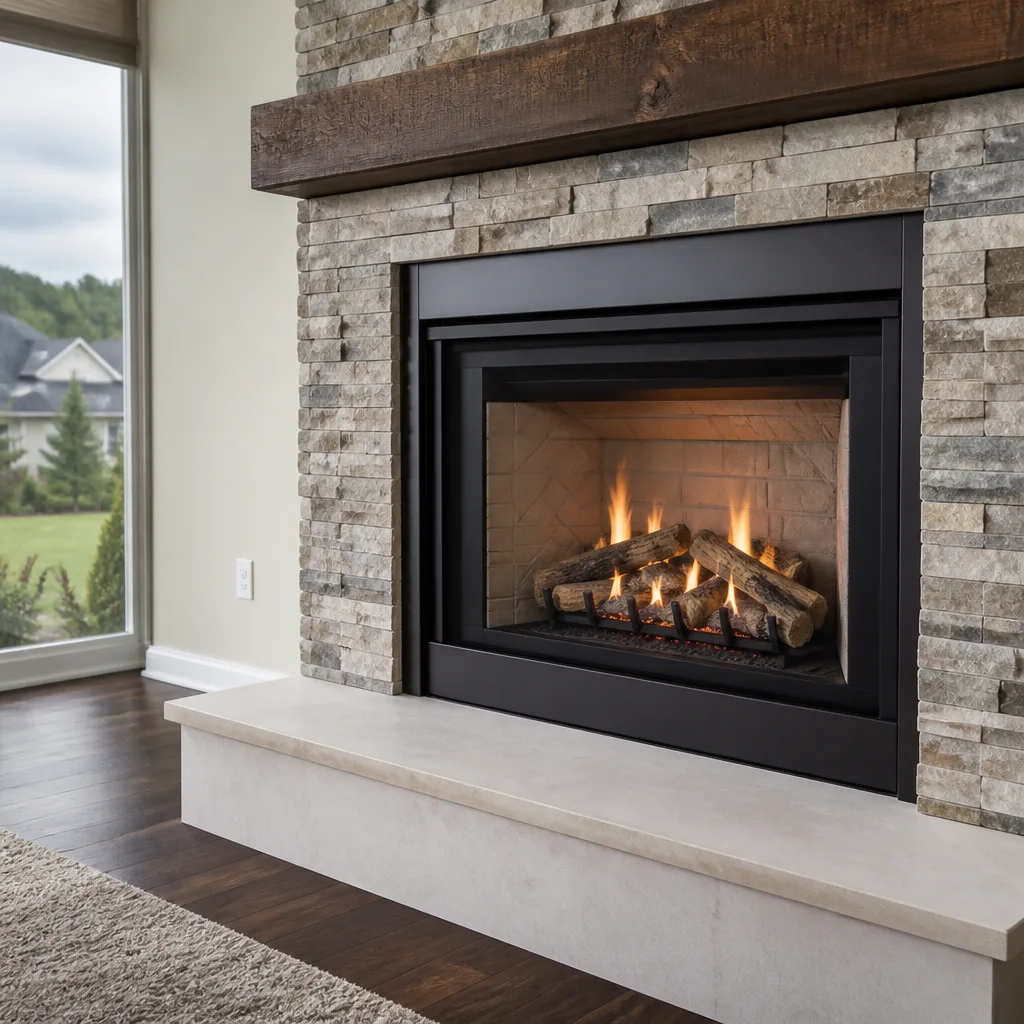
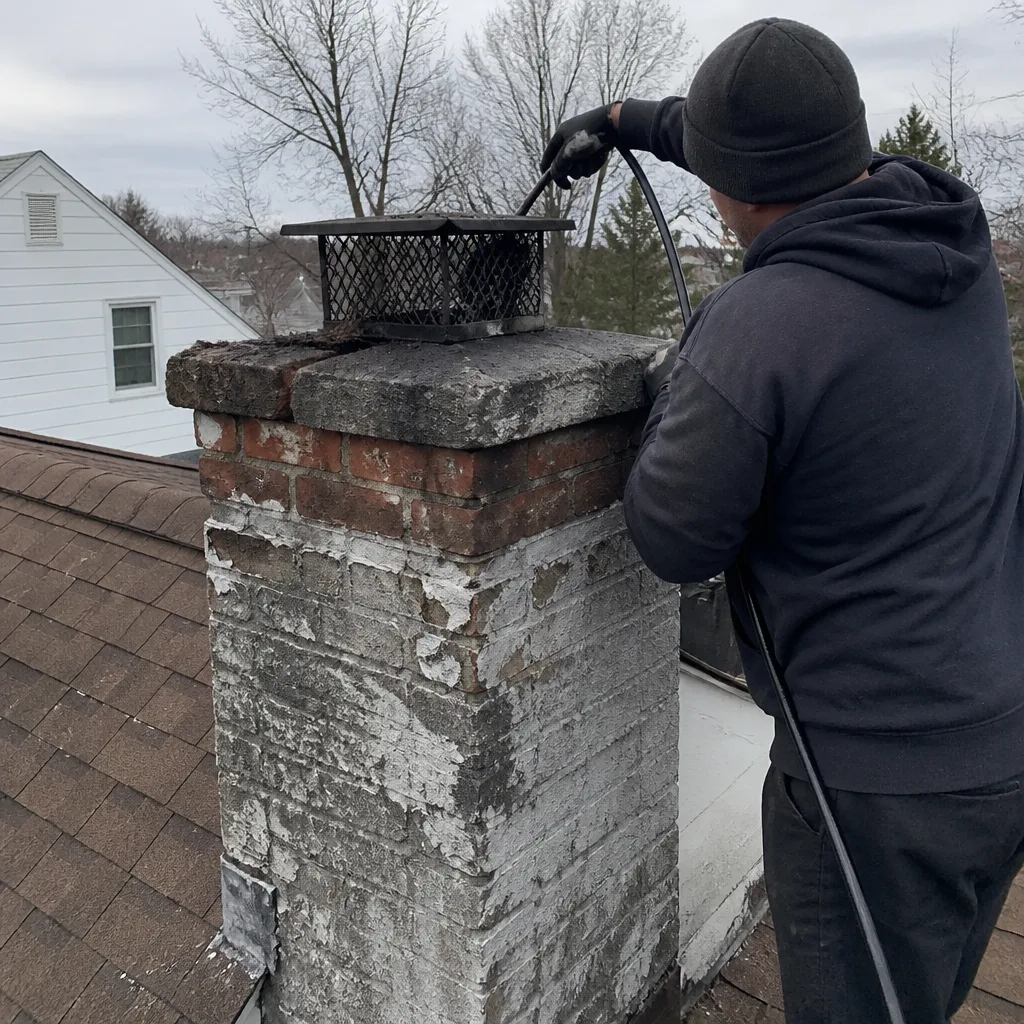 Before
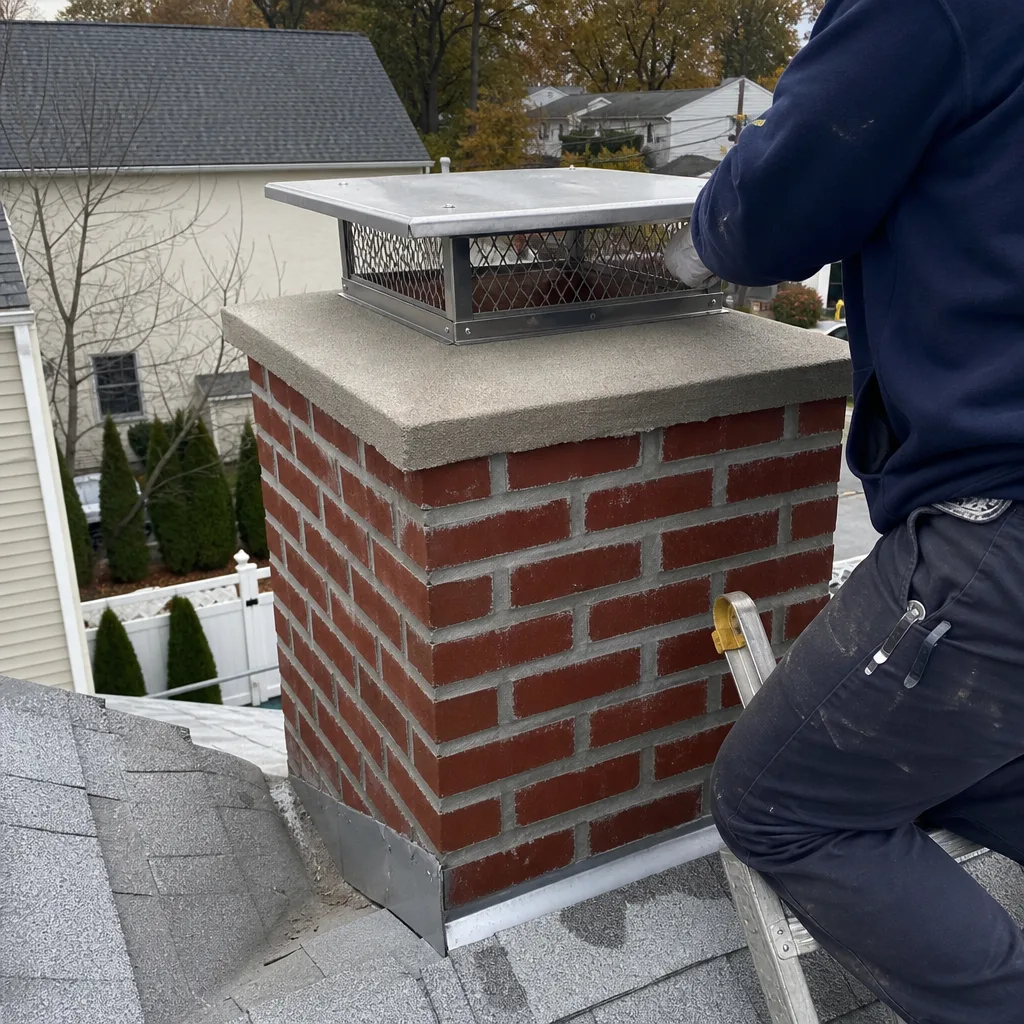 After
After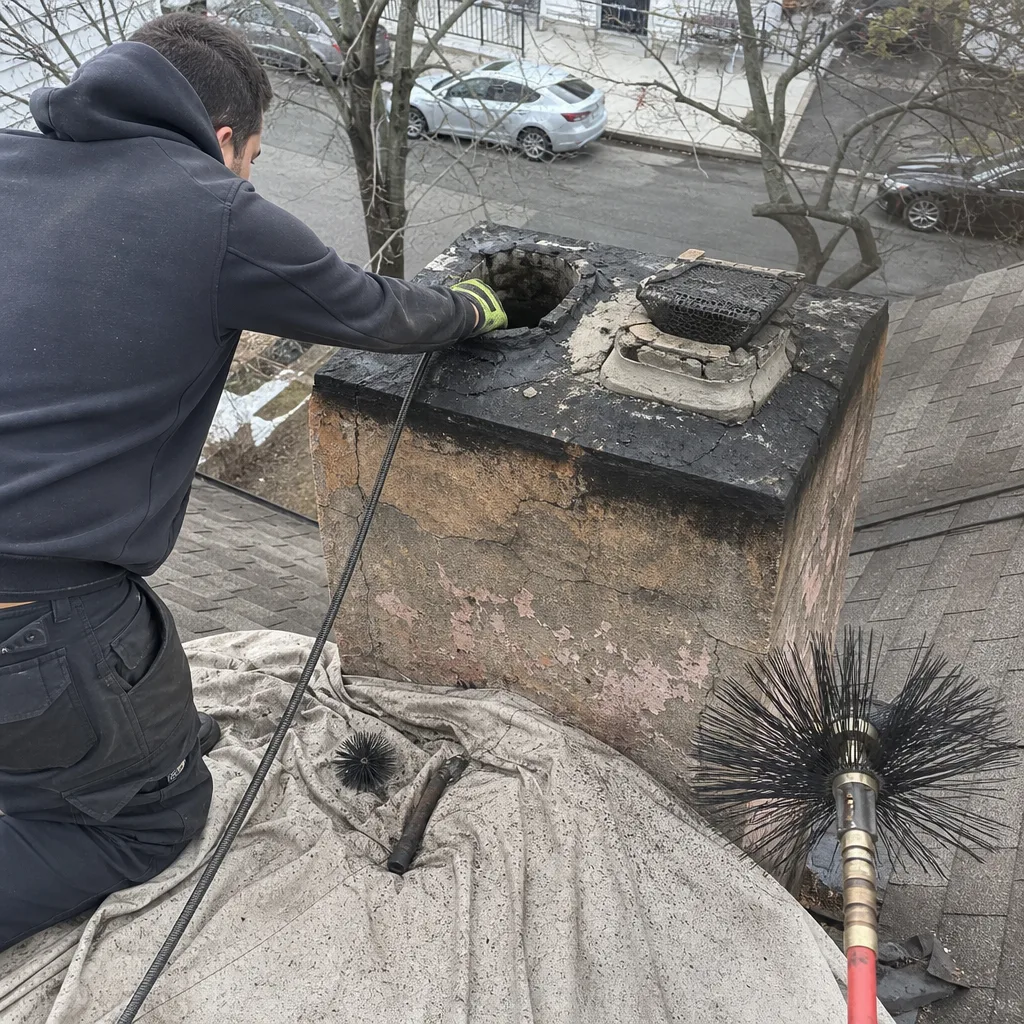 Before
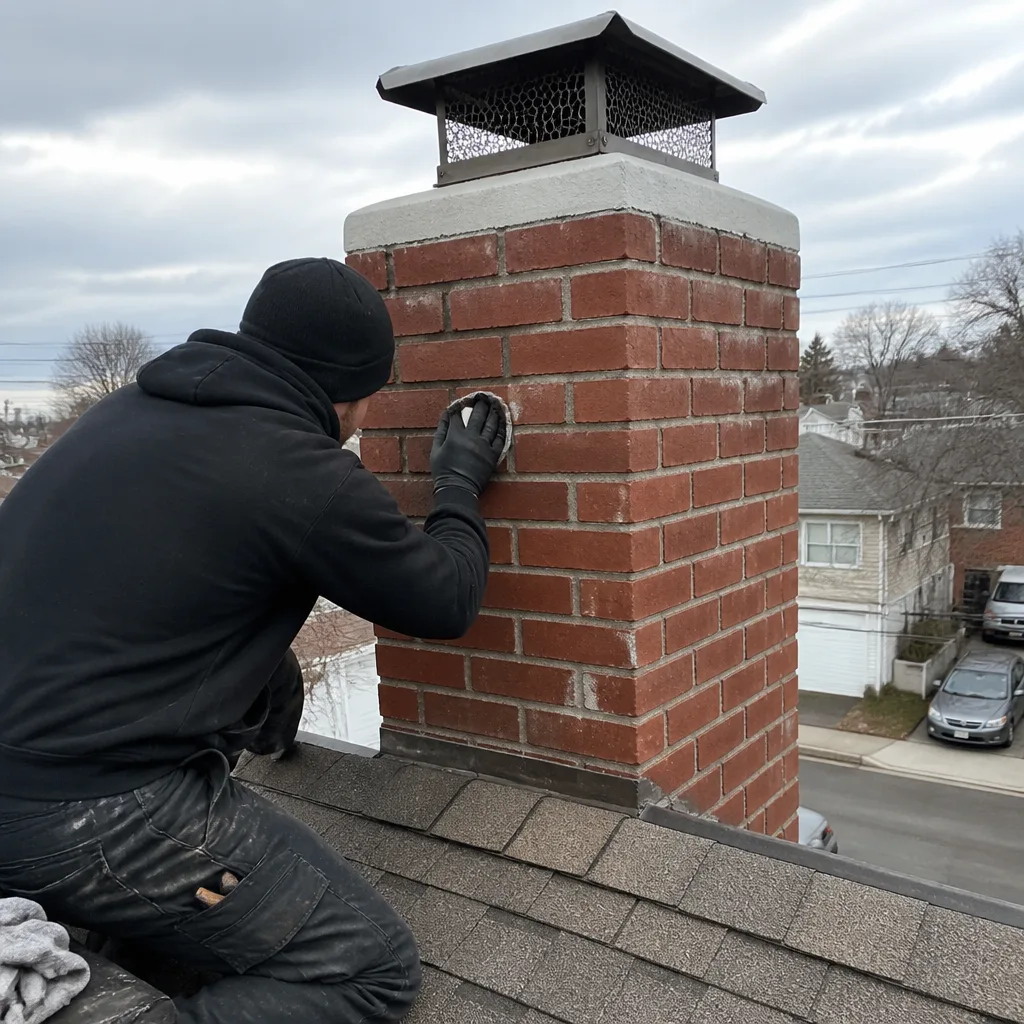 After
After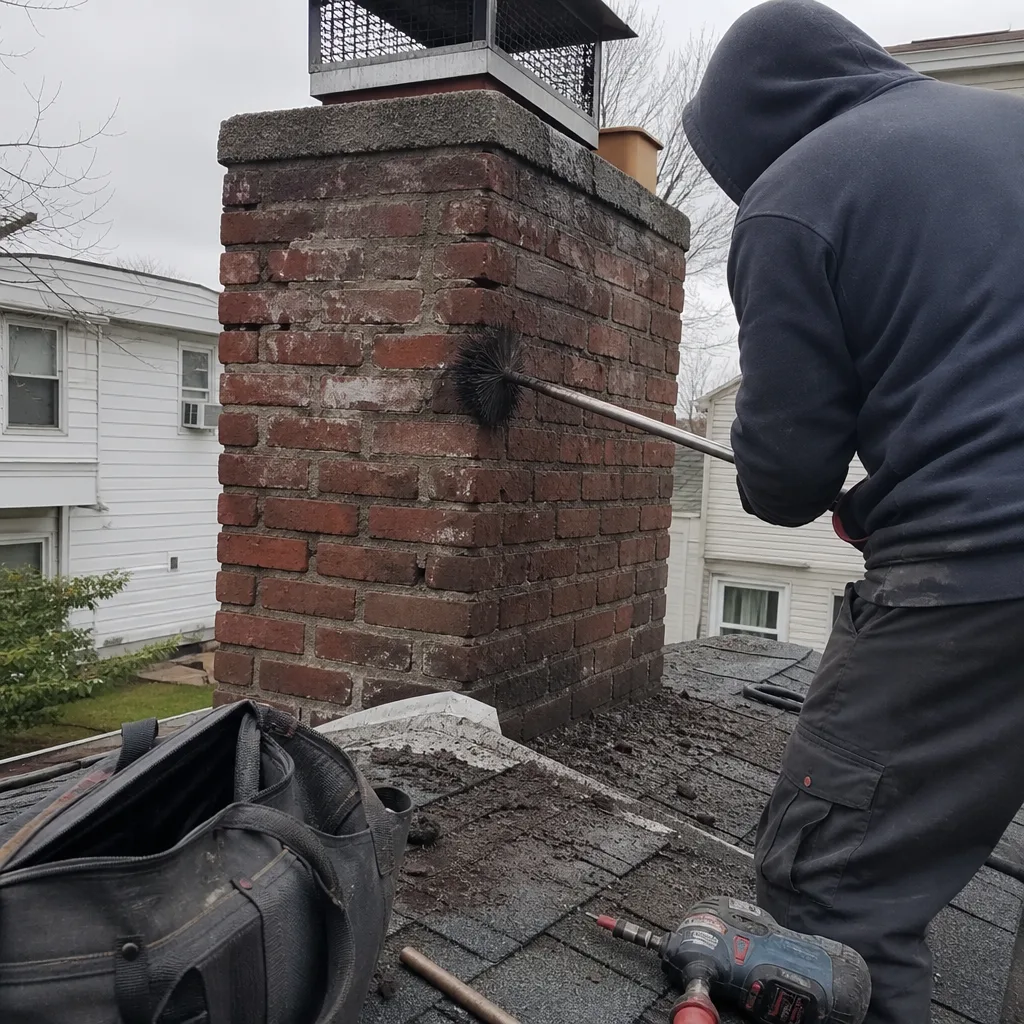 Before
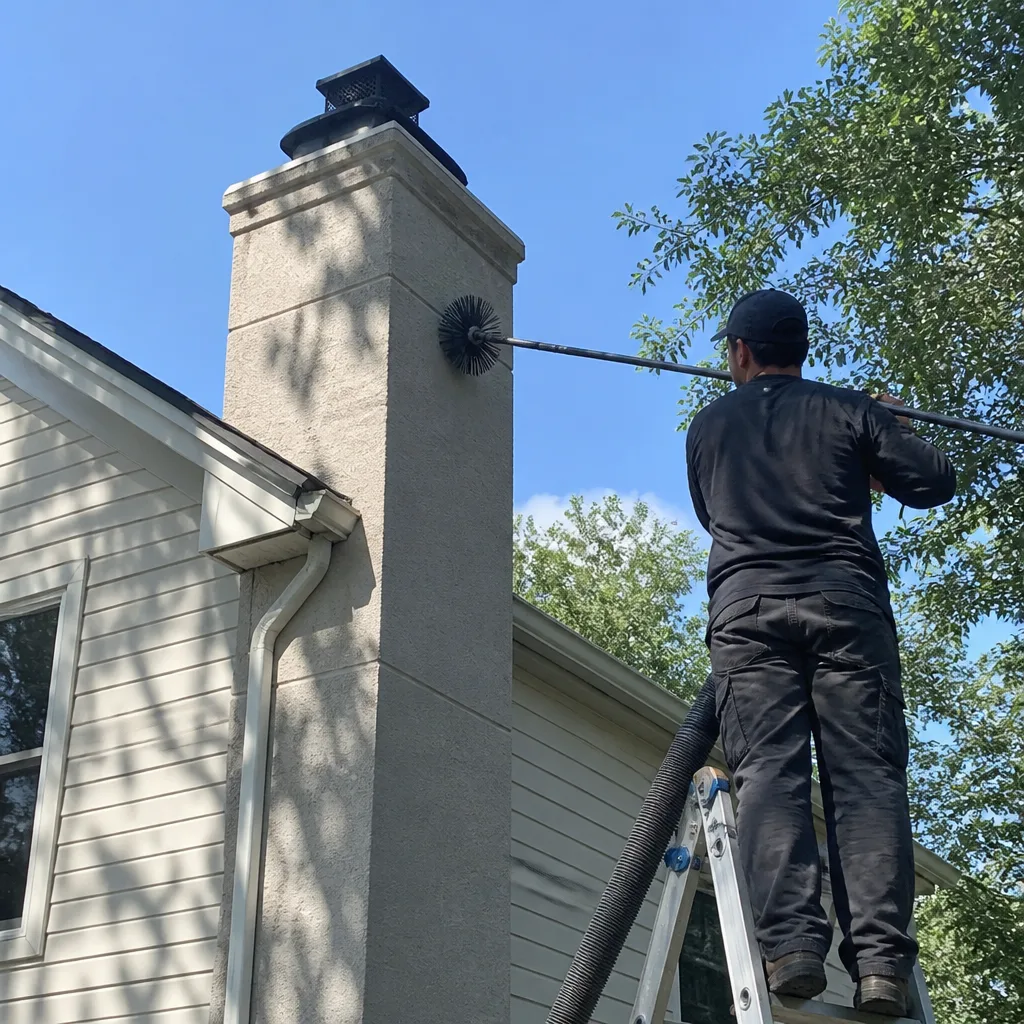 After
AfterDIY vs Professional Chimney Cleaning: The Staten Island Homeowner’s Decision Guide
Chimney brush kits sell well every fall, and some homeowners do use them without incident - but removing surface soot from a firebox is not the same thing as cleaning a flue, and the distinction matters because the part you can’t reach or see is exactly where the dangerous accumulation lives. In our 42 years serving Staten Island, we’ve inspected thousands of chimneys where the homeowner “kept it clean” every season, only to find glazed creosote, cracked liner tiles, or blocked flues that a brush kit never touched. This guide will show you exactly which tasks are within reach for a careful homeowner, where the risk math stops working in your favor, and how to tell the difference before you’ve placed a bet you can’t afford to lose. For more guides & resources, visit our blog.
Quick Answer
Most Staten Island homeowners can safely handle surface-level fireplace maintenance - ash removal, visible damper cleaning, and ground-level cap inspection - but professional chimney cleaning is necessary for flue sweeping, creosote removal beyond first-degree buildup, and any work requiring roof access or diagnostic tools. For a detailed walkthrough of what to look for in a qualified professional, see our guide on How to Hire a Chimney Cleaning Contractor in Staten Island: A Step-by-Step Guide. The critical difference is what you cannot see: a Level-2 camera inspection reveals deteriorated liners, cracked smoke chambers, and hidden blockages that DIY methods miss entirely, and these are exactly the conditions that lead to chimney fires and carbon monoxide intrusion.
Table of Contents
- What Homeowners Can Safely Do Themselves
- Where DIY Stops Being Maintenance and Starts Being Guesswork
- The Creosote Problem: Why Degree Matters
- Equipment Reality Check: Consumer Kits vs. Professional Tools
- The Hidden Cost of DIY: What You Miss and What It Costs
- Insurance, Liability, and the Value of Documentation
- Staten Island-Specific Considerations
- Cost Comparison: DIY vs. Professional in Staten Island
What Homeowners Can Safely Do Themselves
There is honest work a homeowner can do, and doing it well extends the life of your fireplace between professional visits. We encourage it. The key is knowing the boundary.
Firebox Ash Removal
Wait 24 hours after your last fire. Wear a dust mask, not a bandana. Shovel cooled ash into a metal bucket with a tight lid - never plastic, never cardboard. Store the bucket outside on concrete, away from the house, for at least three days. Hot embers hide in ash for longer than most people expect. In 2022, a Tottenville homeowner learned this when stored ash ignited a garage wall; the fire department traced it to ash that had been “cold” for 18 hours.
Once emptied, vacuum the firebox with a shop vac fitted with a HEPA filter. Standard household vacuums will blow fine particulate through the exhaust and into your living space. The ash you’re removing is mostly carbon, but it also contains creosote fragments and combustion byproducts you don’t want airborne.
Visible Damper Cleaning
Open the damper fully. Wipe accessible surfaces with a dry rag first - wet rags on creosote create a smeary mess that hardens. Check that the damper plate seats flat and moves without grinding. If you see rust flakes or the plate wobbles on its pin, that’s your signal to stop and call. A damper that doesn’t seal costs you heated air all winter, but more importantly, it’s a symptom of moisture intrusion that demands diagnosis.
Exterior Cap Inspection From Ground Level
Binoculars help. You’re looking for:
- Mesh screening that’s intact, not rusted through or clogged with soot
- Cap sitting level on the flue, not tilted or missing
- No visible gaps between cap and flue tile
- No vegetation or nests protruding
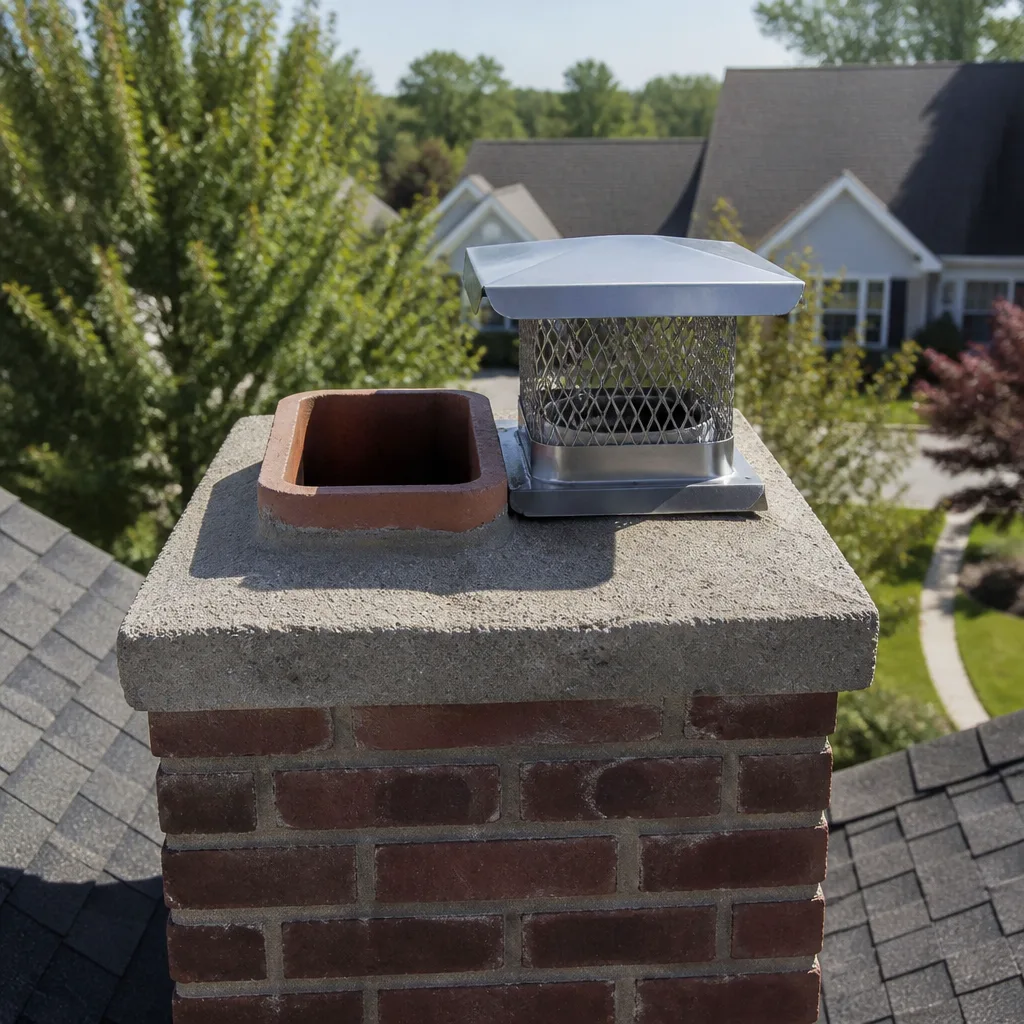
In Annadale and Great Kills, where mature oak canopy is dense, we see caps clogged with leaf debris and squirrel nests every October. A homeowner who spots this early prevents a blocked flue and the carbon monoxide backup that follows. But do not climb to address it. Roof pitch, slate fragility, and the height of many Staten Island colonials make this a professional job.
Glass Door and Surround Cleaning
Standard fireplace glass cleaner or a paste of ash and water will remove most buildup. Avoid ammonia-based products; they etch the glass over time and the fumes are unpleasant when the fireplace is next lit.
That’s the list. Everything beyond this - the flue itself, the smoke chamber, the liner, the crown, the interior cap and mesh - requires tools, training, and documentation you don’t have.
Where DIY Stops Being Maintenance and Starts Being Guesswork
The transition point is deceptively simple to identify: it’s the moment you cannot verify your own work.
When you sweep a kitchen floor, you see the result. When you brush a flue from below, you cannot see whether the brush contacted the full circumference at every elevation. You cannot see whether the creosote you dislodged fell to the smoke chamber shelf or stuck halfway down. You cannot see whether your brushing cracked a deteriorated flue tile that was already compromised. You’re performing an action and hoping the outcome matches your intention.
In our experience, this guesswork breaks down at four specific thresholds:
- Height and access. Most Staten Island homes built between 1920 and 1970 have chimneys between 25 and 35 feet. A standard consumer brush rod set extends 12 feet. Extension kits exist, but each connection point is a failure risk, and flexible rods that navigate offset flues cost more than many professional sweeps.
- Containment. Professional sweeping uses HEPA vacuums with negative-air containment. The brush disturbs decades of accumulated particulate; without sealed containment, that dust settles in your HVAC system, your upholstery, and your lungs. We’ve been called to homes in Westerleigh where the homeowner’s “successful” DIY sweep left a fine black film on every surface upstairs.
- Diagnostic blindness. Cleaning without inspecting is maintenance theater. The brush removes what it touches, but it does not reveal why creosote accumulated unevenly, or whether the liner has shifted, or whether a hidden crack is drawing combustion gases into the wall cavity. These conditions persist and worsen while the homeowner believes the chimney is “clean.”
- Creosote chemistry. First-degree creosote - dusty, flaky, recently formed - brushes off. Second-degree creosote, which forms when fires smolder at lower temperatures, becomes tar-like and requires chemical treatment or mechanical removal with specialized chains and whips. Third-degree glazed creosote, the glassy black deposit that causes most chimney fires, is essentially baked-on resin. No brush kit addresses it. In our chimney cleaning and sweep work in Staten Island, we find glazed creosote in roughly one of every three inspections of homes that burn wood regularly.
The guesswork point, then, is not a matter of skill or effort. It’s a matter of information asymmetry. The chimney knows more than you do, and it won’t tell you until something fails.
The Creosote Problem: Why Degree Matters
Creosote is not a single substance. The National Fire Protection Association recognizes three stages, and each demands a different response. Understanding this distinction is where most DIY guides fail their readers entirely.
First-Degree Creosote
Appearance: dusty, flaky, light brown to black. Texture similar to coffee grounds. Forms during hot, fast fires with dry, seasoned hardwood.
DIY viability: Limited. A brush kit can dislodge first-degree creosote from accessible flue sections, but cannot verify complete removal or address accumulation above the reachable zone. If you burn properly seasoned oak or maple and maintain hot fires, first-degree creosote may be all you produce. Most Staten Island homeowners do not achieve this consistently.
Second-Degree Creosote
Appearance: shiny black flakes, tar-like in consistency, often forming puffy or ribbon deposits. Forms during slow, smoldering fires, with unseasoned wood, or when the damper is closed too early.
DIY viability: None. Brushing second-degree creosote smears it and can polish it into a harder surface. Professional removal requires chemical treatment - we use CSIA-approved conditioners that break the tar bond over 12-24 hours, followed by mechanical removal with rotating chains or polypropylene whips. The chemicals are not available to consumers; the equipment costs more than a decade of professional sweeps.
Third-Degree Glazed Creosote
Appearance: hard, glossy, enamel-like black coating. Forms from prolonged low-temperature burning, unseasoned wood, or restricted airflow. This is the fuel for chimney fires exceeding 2,000 degrees Fahrenheit.
DIY viability: Dangerous to attempt. Glazed creosote is removed through chemical treatment with PCR (Poultice Creosote Remover) or similar professional compounds, applied in layers over multiple days, then mechanically removed. Attempting to chip or scrape it risks damaging clay flue tiles or stainless steel liners. In 2019, a homeowner in New Dorp attempted removal with a wire brush attachment on a drill; he cracked three flue tiles and created a path for combustion gases into the chimney wall. The repair required a stainless steel liner from our chimney repair team in Staten Island and cost 14 times what a professional sweep would have.
The critical point: you cannot identify creosote degree from below with a flashlight. It requires visual inspection, ideally with a camera, at multiple elevations. A homeowner brushing blindly is treating an unknown condition with an inadequate tool.
Equipment Reality Check: Consumer Kits vs. Professional Tools
The hardware store brush kit - typically a 6-inch polypropylene brush, 12 feet of snap-together fiberglass rods, and a plastic dust sheet - costs $40 to $80. It is not inadequate because it is inexpensive. It is inadequate because it was designed for a different job than the one your chimney needs.
What a Consumer Kit Provides
- Single-diameter brush sized for a “standard” flue - typically 6 or 8 inches round
- Rigid rods that cannot navigate flue offsets or bends
- No vacuum containment; dust sheet is passive protection only
- No inspection capability beyond what the user can see from below
- No means of verifying complete contact with flue walls
What Professional Equipment Does Differently
Our sweeps arrive with brush-and-vacuum systems from Copperfield and Gelco, fitted with HEPA containment that maintains negative air pressure throughout the cleaning. The vacuum captures particulate at the point of disturbance, not after it settles. For offset flues common in pre-war Staten Island homes, we use flexible steel cables with adjustable whips that navigate bends while maintaining centrifugal contact with all surfaces.
The inspection equipment matters as much as the cleaning tools. Our Level-2 inspections use video cameras on articulating heads, providing 360-degree views of flue interiors at full resolution. The homeowner sees what we see, in real time or recorded. This is not a sales technique; it is the documentation that transforms opinion into fact.
Dust containment alone justifies professional service for many homeowners. A DIY sweep in a furnished home releases respirable particulate that circulates for days. Our HEPA systems filter to 0.3 microns. The difference is measurable in air quality and in the absence of that fine black film on window sills three days later.
For fireplace services in Staten Island involving insert installations or gas conversions, the equipment gap widens further. Proper venting requires combustion analysis tools, draft gauges, and manufacturer-specific fittings that no consumer owns.
The Hidden Cost of DIY: What You Miss and What It Costs
The visible price of a DIY kit is $60. The hidden price is the conditions that persist undetected until they become expensive emergencies.
The Deteriorated Liner Tile
Clay flue tiles crack from thermal shock, settlement, or freeze-thaw cycles. A cracked tile exposes the chimney’s surrounding masonry to direct combustion temperatures and allows gases to seep into wall cavities. In Staten Island’s climate, with temperature swings from single digits to humid 90s, thermal cycling accelerates this deterioration.
A homeowner brushing past a cracked tile might never know. The brush moves smoothly; the flue looks dark; the job seems complete. The crack widens over seasons. Eventually, heat transfer degrades mortar, or combustion gases migrate. The repair, when discovered, typically requires relining with stainless steel - DuraFlex or equivalent - at $2,500 to $5,000 depending on flue length and access. A professional inspection catches this at the hairline stage, when monitoring or minor repair may suffice.
The Cracked Smoke Chamber
The smoke chamber - the area above the damper, below the flue - is the most neglected zone in chimney anatomy. Building codes since the 1940s have required parging (smoothing) to reduce turbulence, but many Staten Island homes from the 1960s and 1970s were built with corbeled brick that creates sharp edges and eddies. Creosote accumulates in these corners; cracks form where heat concentrates.
No consumer brush reaches the smoke chamber effectively. No consumer inspection sees it. We document smoke chamber conditions with camera equipment specifically designed for tight angles. When parging failure is caught early, HeatShield refractory coating can restore the surface without reconstruction. When missed, the chamber may require demolition and rebuild.
The Blocked Rain Cap
Caps clog with creosote, with leaf debris, with nests. A partially blocked cap restricts draft, causing smoke backup and accelerated creosote formation. A fully blocked cap can force combustion gases into the home. Ground-level inspection catches obvious problems; it cannot verify cap condition after cleaning, or confirm that mesh screening is intact.
The Real Math
Professional chimney sweeping in Staten Island ranges from $200 to $350 for a standard wood-burning fireplace, including Level-2 inspection. The conditions listed above, when missed, generate repair costs of $2,000 to $8,000. The DIY “savings” evaporate if a single significant condition escapes detection - and in our experience, one always does, eventually. See our Chimney Cleaning Cost Breakdown: The Staten Island Homeowner’s Reference for 2026 for full pricing details.
Insurance, Liability, and the Value of Documentation
This is the consideration few guides address, and it matters more as homeowners age and their risk tolerance narrows.
After a chimney fire, your insurance carrier will request maintenance records. “I clean it myself every fall” is not documentation. It is a statement without evidence, and in a disputed claim, it provides no protection. Carriers increasingly require professional inspection reports for wood-burning systems, particularly in high-fire-risk areas or for homes over 30 years old.
A professional inspection report from Hearthstone Chimney Co. includes:
- Dated photographs of flue interior, smoke chamber, damper, and exterior crown
- Written condition assessment with specific measurements and locations
- Clear verdict: pass, monitor, or repair required
- Recommendations prioritized by safety impact and timeline
This documentation serves multiple purposes. It satisfies insurance requirements. It establishes baseline condition for future comparison - “this crack was 1/8 inch in 2023, it is 3/8 inch now, repair is now necessary.” It protects property value at sale; buyers and their inspectors increasingly request chimney documentation.
Perhaps most valuably for our Staten Island clientele, it removes uncertainty. You know what you have. You know what it needs. You know when. The anxiety of hidden problems - common among homeowners who’ve been surprised by contractor discoveries - is replaced by clarity.
Our Hearthstone Chimney Co. home page details our inspection process, but the essential point is this: documentation is a form of financial protection that DIY cleaning cannot provide.
Staten Island-Specific Considerations
Local context shapes chimney maintenance in ways that generic guides ignore.
Climate and Masonry
Staten Island’s coastal position exposes chimneys to salt-laden air that accelerates metal deterioration and masonry spalling. Cap mesh, damper hardware, and flashing corrode faster than inland equivalents. Freeze-thaw cycles - common in late winter when daytime thawing meets overnight refreezing - exploit micro-cracks in crowns and mortar joints. We see more crown rebuilds in Tottenville and Great Kills, closest to open water, than in inland neighborhoods.
Housing Stock Age
Significant portions of Staten Island’s housing was built between 1920 and 1970, with chimneys constructed to codes that predated modern understanding of combustion safety. Unlined chimneys are common in pre-1950 construction. Transitional clay liners from the 1960s often lack the height and integrity of modern standards. These chimneys function, but they function with narrower margins. Professional assessment is not optional; it is the only way to know whether your particular chimney’s age and construction meet modern safety requirements.
Local Fuel Practices
Seasoned hardwood - oak, maple, beech - is the standard for clean burning. In practice, many Staten Island homeowners burn whatever is available: construction scrap, unseasoned wood from tree removals, pressed logs with unknown binders. Each choice affects creosote formation. We’ve inspected chimneys in Westerleigh where the homeowner burned nothing but pallet wood; the flue was coated with a hybrid creosote-resin deposit that required chemical treatment and mechanical removal over two visits.
Permit and Code Context
New York City building codes, enforced through the Department of Buildings, require permits for chimney relining, structural repair, and certain modifications. DIY cleaning does not require permitting, but DIY repair of conditions discovered during cleaning may - and unpermitted work complicates insurance and resale. Professional work includes permit handling as standard practice.
Cost Comparison: DIY vs. Professional in Staten Island
Direct cost comparison requires honesty about what each approach actually includes.
| Cost Element | DIY Approach | Professional Service |
|---|---|---|
| Initial outlay | $40-$80 brush kit | $200-$350 sweep and inspection |
| Equipment needed | Shop vac with HEPA ($200+), ladder for exterior ($150+), inspection camera ($100+) | Included in service |
| Documentation | None | Photo report, written assessment |
| Condition diagnosis | Subjective, unverified | Camera inspection with specific findings |
| Hidden condition risk | High - no detection capability | Low - inspection designed to find conditions |
| Insurance recognition | None | Report satisfies carrier requirements |
| Repair if condition found | Full retail, plus potential DIY error | Upfront pricing, often with standing offers |
At Hearthstone Chimney Co., our standing offers include $50 off any repair over $250, free second opinion on any written estimate, an $89 seasonal tune-up, and a permanent 5% senior and veteran discount. These are not introductory come-ons; they are permanent pricing structures for a clientele that stays with us for decades.
The honest calculation: if you own the necessary equipment, burn only seasoned hardwood, maintain hot fires, and your chimney is under 10 years old with no history of problems, DIY surface maintenance between professional inspections is reasonable. For every other scenario - which describes most Staten Island homeowners we serve - professional service is the lower-cost path when total risk and lifetime expense are considered.
Common Mistakes to Avoid
- Brushing a flue without inspecting first. You wouldn’t clean a wound without looking at it. Brushing blindly can damage already-compromised liner tiles or force debris into cracks, worsening hidden conditions.
- Using a wire brush on stainless steel liners. Wire bristles score stainless steel, creating corrosion points that shorten liner life. Professional sweeps match brush material to liner type - polypropylene for most applications, specialized compounds for coated liners.
- Cleaning from below only. Gravity works against you. Debris dislodged from upper flue sections falls onto the smoke chamber shelf, where it accumulates and can ignite. Professional sweeping includes smoke chamber cleaning and debris removal from below.
- Ignoring the exterior. In Staten Island’s salt air, crown deterioration and flashing separation are progressive conditions. A homeowner who cleans the interior annually but never examines the exterior is maintaining half a system.
- Burning unseasoned wood after DIY cleaning. Freshly cleaned flues accumulate creosote faster when combustion is incomplete. The psychological effect of “I just cleaned it” leads to complacent burning practices that accelerate re-accumulation.
- Delaying professional service after finding a problem. “I’ll watch it” is a common response to our recommendations. In our experience, conditions never improve with watching; they worsen at rates determined by use patterns and weather, not by homeowner attention.
When to Call a Professional
Call when you cannot verify your own work. Call when the flue requires access beyond your comfortable reach. Call when creosote appears shiny, tar-like, or glazed. Call when you smell smoke in rooms other than where the fireplace sits, when drafting seems weaker than previous seasons, or when you hear dripping in the chimney during rain. Call when your insurance renewal requests inspection documentation, when you’re preparing to sell, or when you’ve simply reached the age where roof work is no longer sensible.
At Hearthstone Chimney Co., we’ve served Staten Island for over 42 years. Our technicians are background-checked, uniformed, and complete most jobs in a single visit. We provide no-hassle upfront pricing - the number on the estimate is the number on the invoice - and every job is backed by our 90-Day Done Right Promise in writing, no arguing. If it’s not right, we make it right.
Hearthstone Chimney Co. offers free estimates in Staten Island - call (516) 613-3035.
Frequently Asked Questions
A standard chimney sweep with Level-2 camera inspection typically costs between $200 and $350 for a wood-burning fireplace in Staten Island. Gas fireplace inspections generally run lower, while multi-flue systems or those requiring significant creosote removal may cost more. Call (516) 613-3035 for an exact quote - estimates are free.
Light use reduces creosote accumulation but does not eliminate the need for professional inspection. Occasional burning often produces more creosote per fire because the chimney never reaches sustained operating temperature. We recommend professional inspection every 12 months regardless of use frequency, with cleaning as needed based on findings.
The National Fire Protection Association Standard 211 recommends annual inspection, with cleaning frequency determined by creosote accumulation. In practice, most Staten Island homeowners who burn wood regularly need annual sweeping; those with gas systems may alternate years if inspection shows minimal debris. Coastal exposure and freeze-thaw cycling make annual exterior assessment particularly important here.
Skipped maintenance allows creosote to accumulate beyond safe levels, increasing chimney fire risk. Hidden conditions - cracked liners, deteriorated mortar, blocked caps - progress undetected until they cause smoke backup, carbon monoxide intrusion, or structural damage. The cost of deferred maintenance typically exceeds preventive care by factors of 10 to 20 when major repair becomes necessary.
A liner recommendation should always be supported by specific photographic evidence and a clear explanation of the defect. At Hearthstone, we show you the images and explain exactly what we see: cracked tiles, gaps at joints, spalling surfaces, or inadequate sizing for your appliance. Nothing is recommended without camera evidence you can see for yourself, and we will plainly tell you when work can safely wait. Our free second opinion offer exists precisely so you can verify any recommendation you’re uncertain about.
Professional service includes flue brushing with proper containment, smoke chamber cleaning, damper inspection and adjustment, firebox assessment, exterior crown and cap evaluation, and Level-2 camera inspection with photo documentation. DIY maintenance is limited to ash removal, visible surface cleaning, and ground-level exterior observation. The critical difference is diagnostic capability: professional service finds conditions; DIY cleaning assumes they don’t exist.
The Bottom Line
The DIY versus professional question is not about competence or thrift. It is about information and risk. A capable homeowner can maintain the visible, accessible portions of a fireplace system. No homeowner can inspect a flue interior, diagnose creosote chemistry, or document conditions for insurance and resale. The narrow band of appropriate DIY work is real and valuable; it is also bounded by hard limits of access, equipment, and verification. Beyond those limits, professional service is not an expense to minimize but a cost to manage - through upfront pricing, written guarantees, and the certainty that comes from documented inspection. In 42 years of serving Staten Island, we’ve learned that the homeowners who sleep soundly are not the ones who saved $200 on a brush kit. They’re the ones who know exactly what they have, what it needs, and that it was done right.
Written by Russell Haines, Owner at Hearthstone Chimney Co., serving Staten Island since 2014.