
Last updated September 10, 2026
Level 1 sweep and inspection to the NFPA 211 annual standard - flue, crown, cap, and flashing checked and photographed
Chimney sweep logs do not sweep chimneys. They loosen some creosote - which then falls where a brush and vacuum still have to collect it.
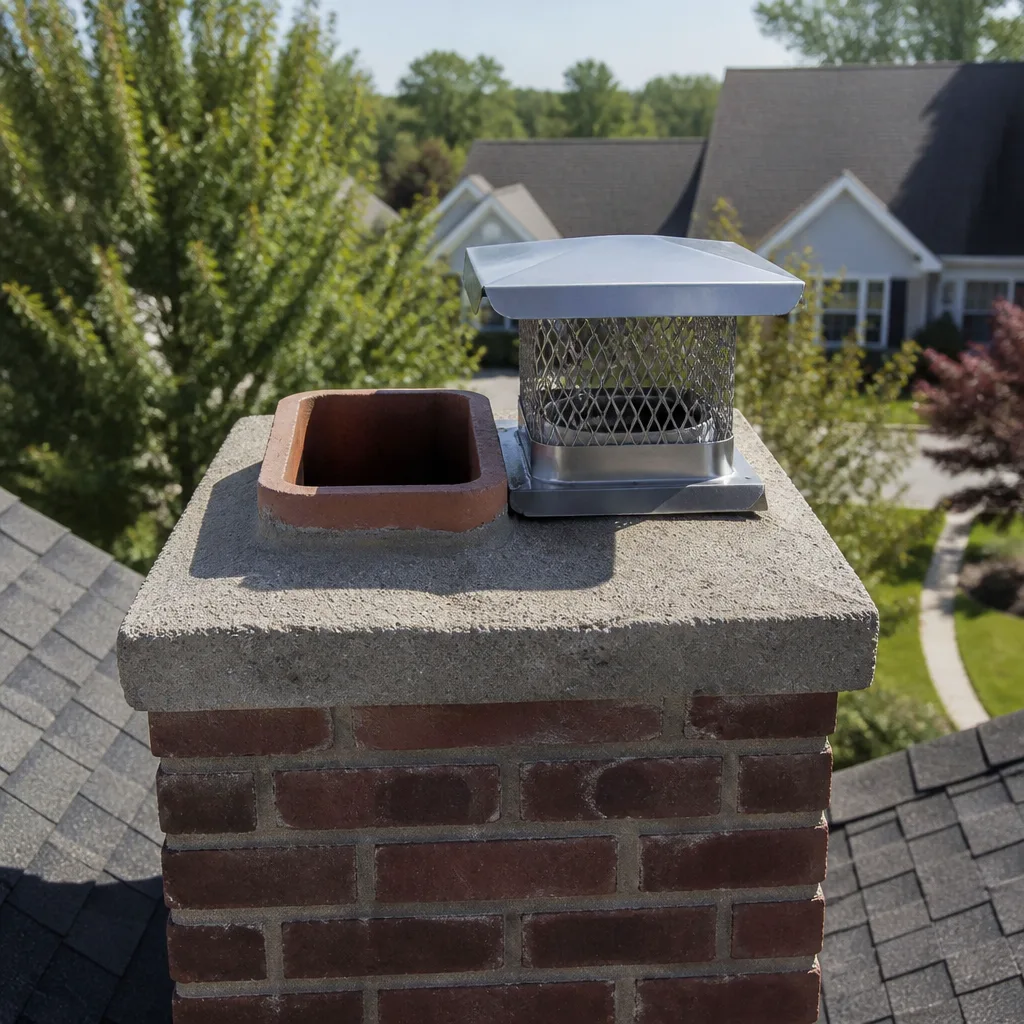
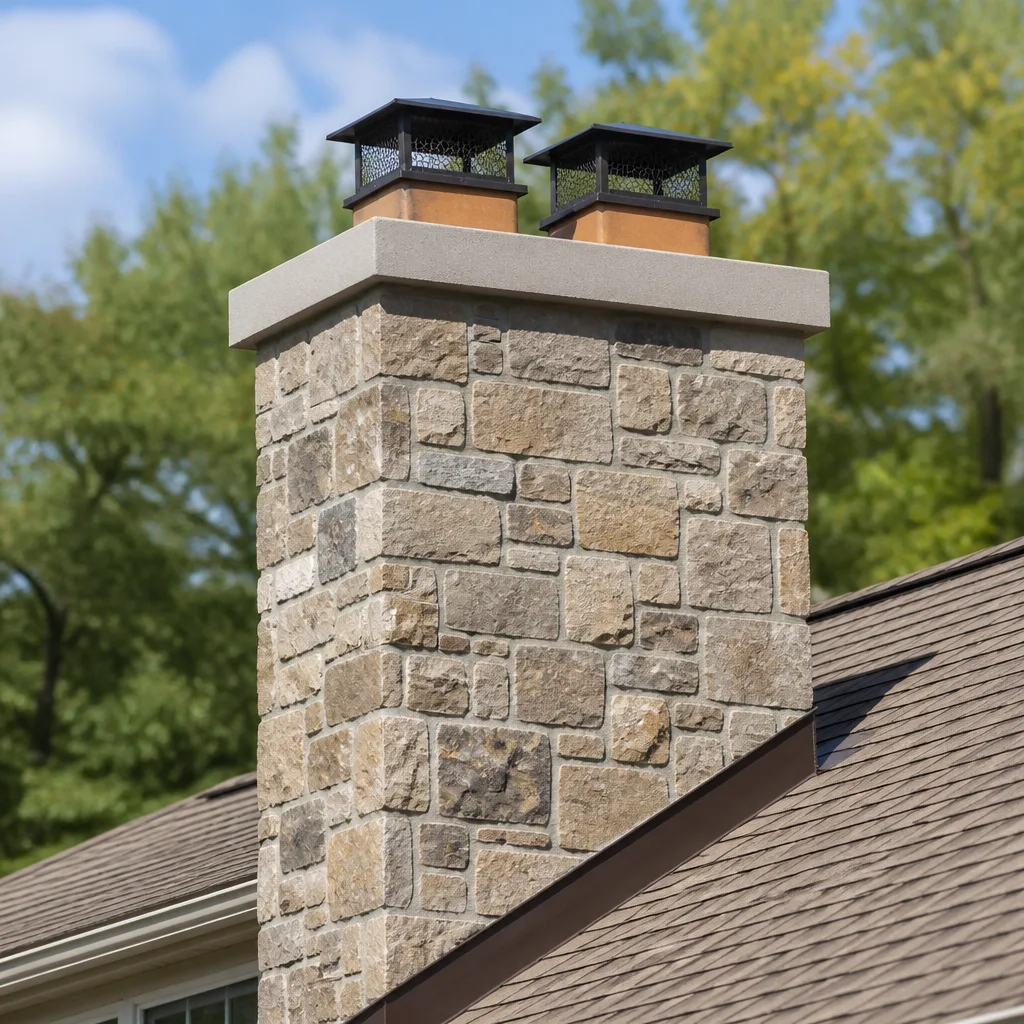
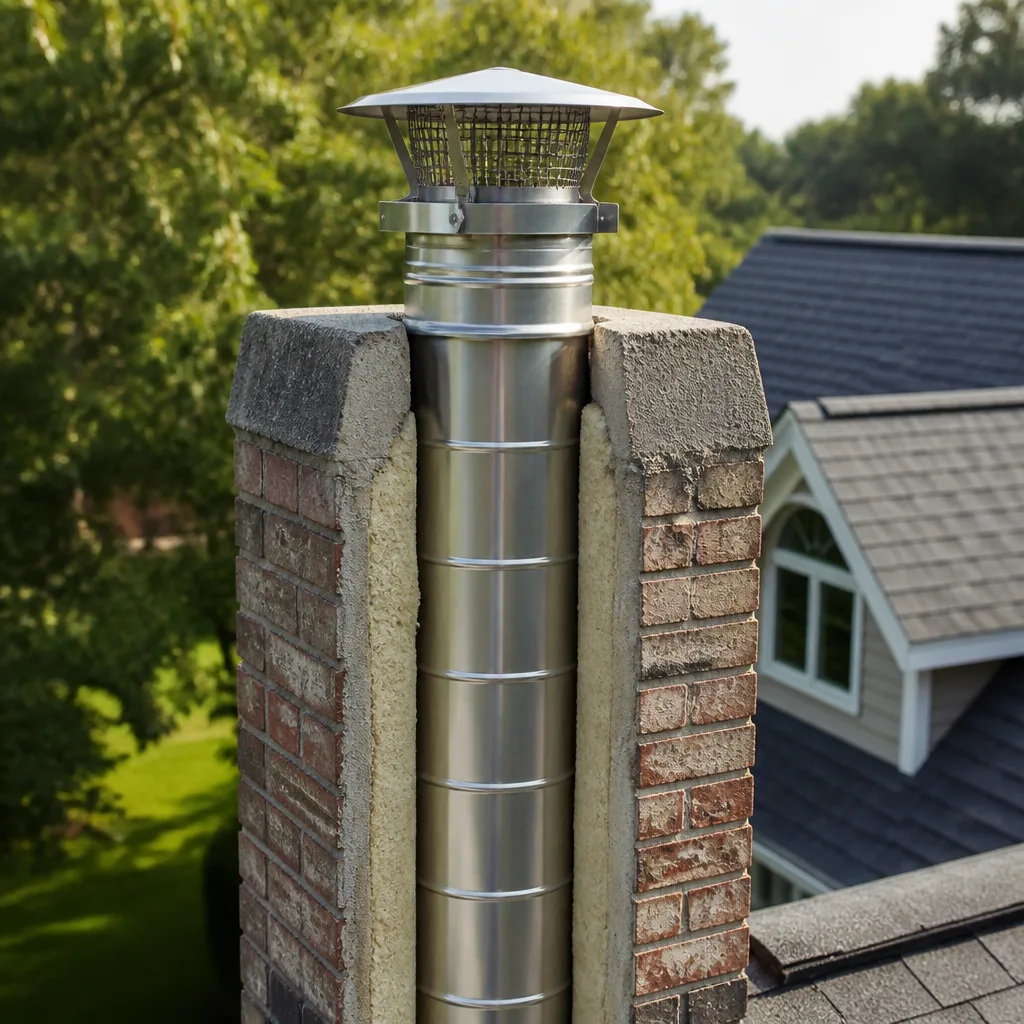
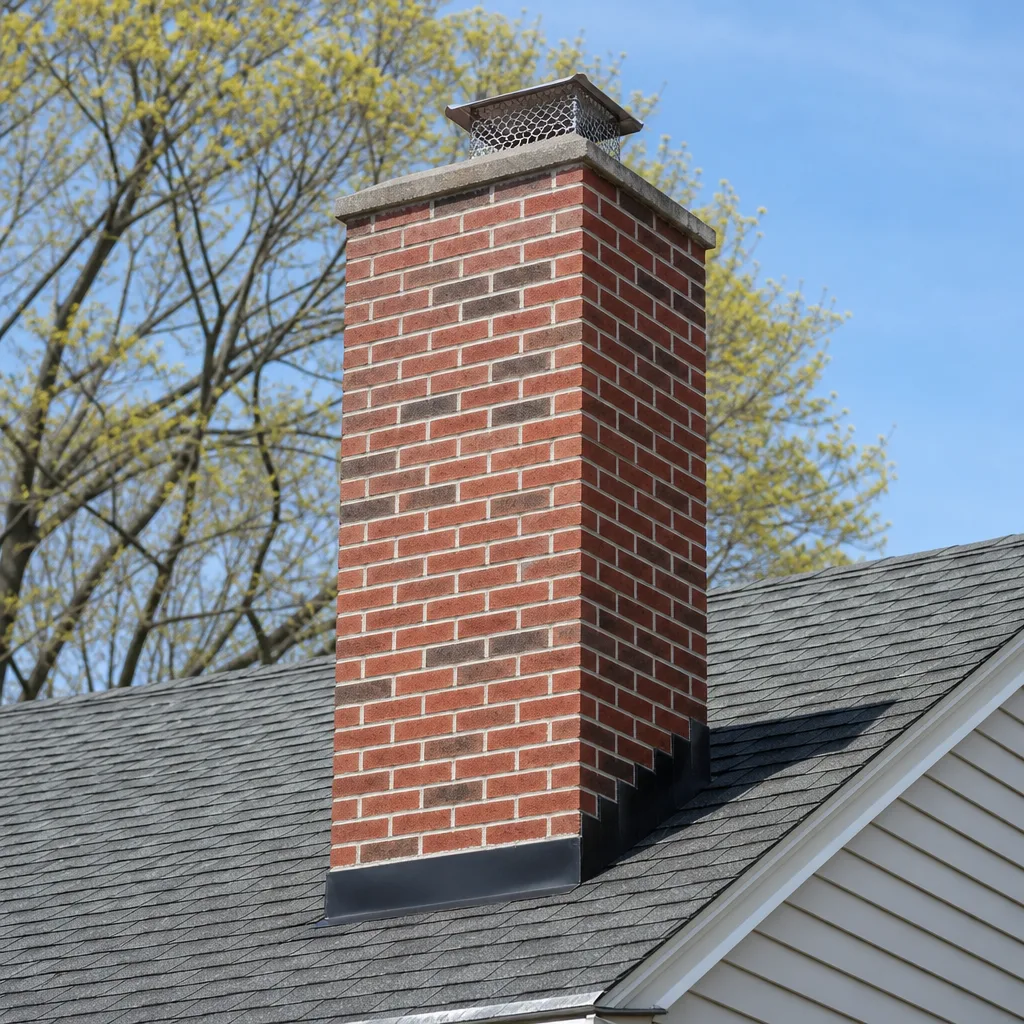
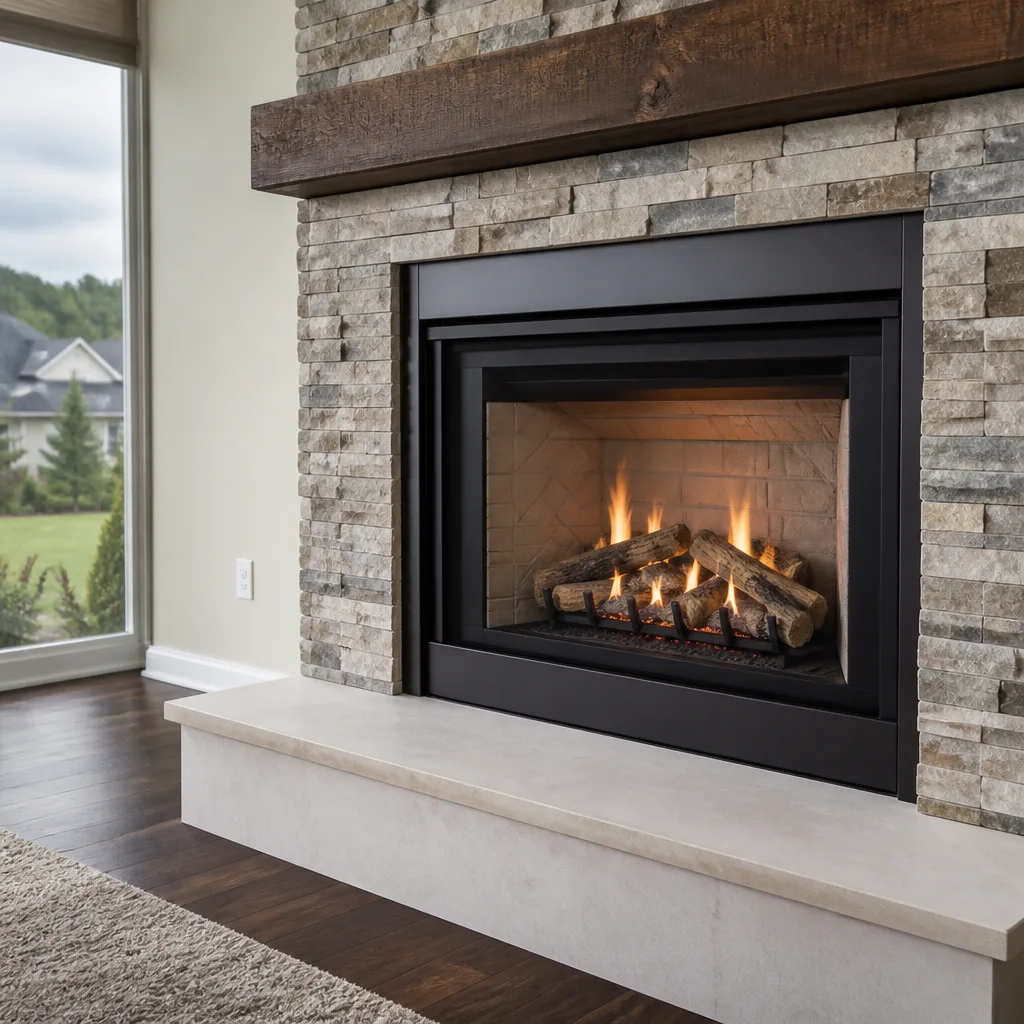
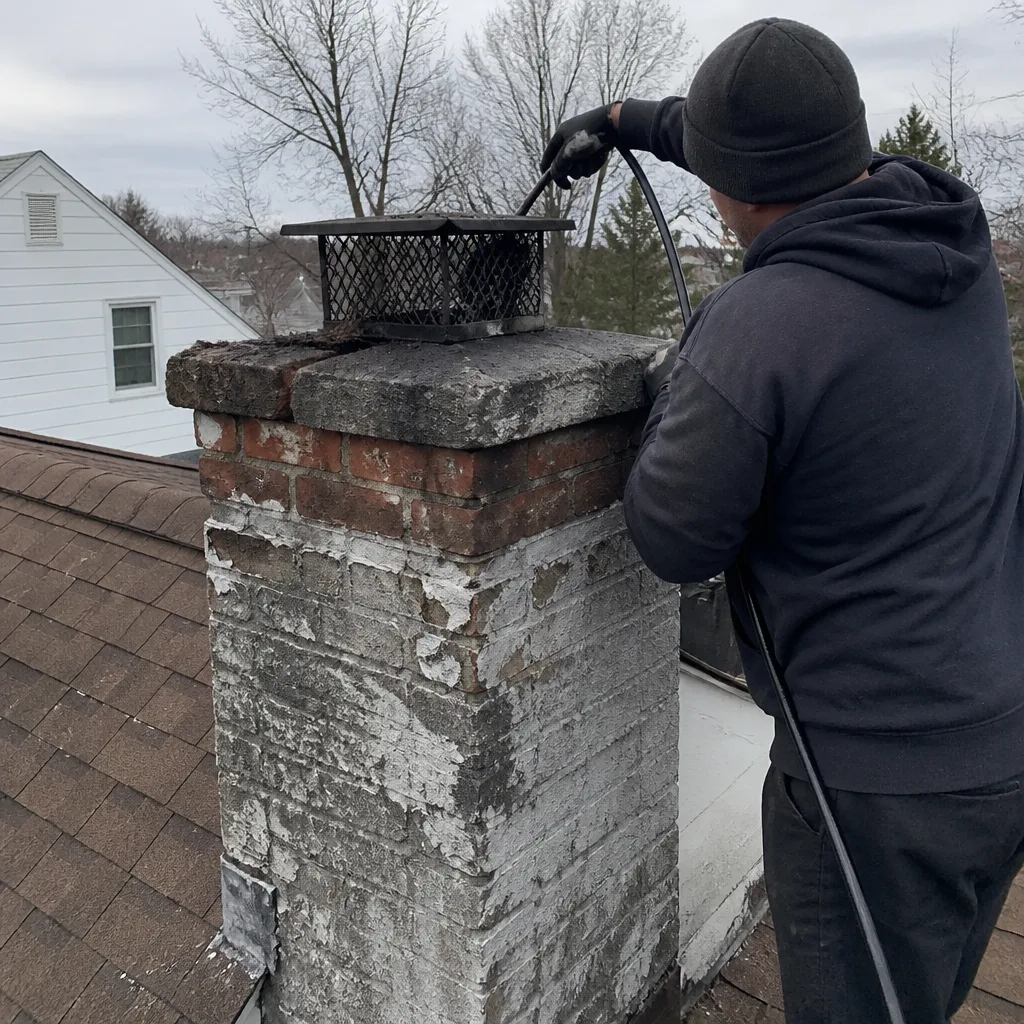 Before
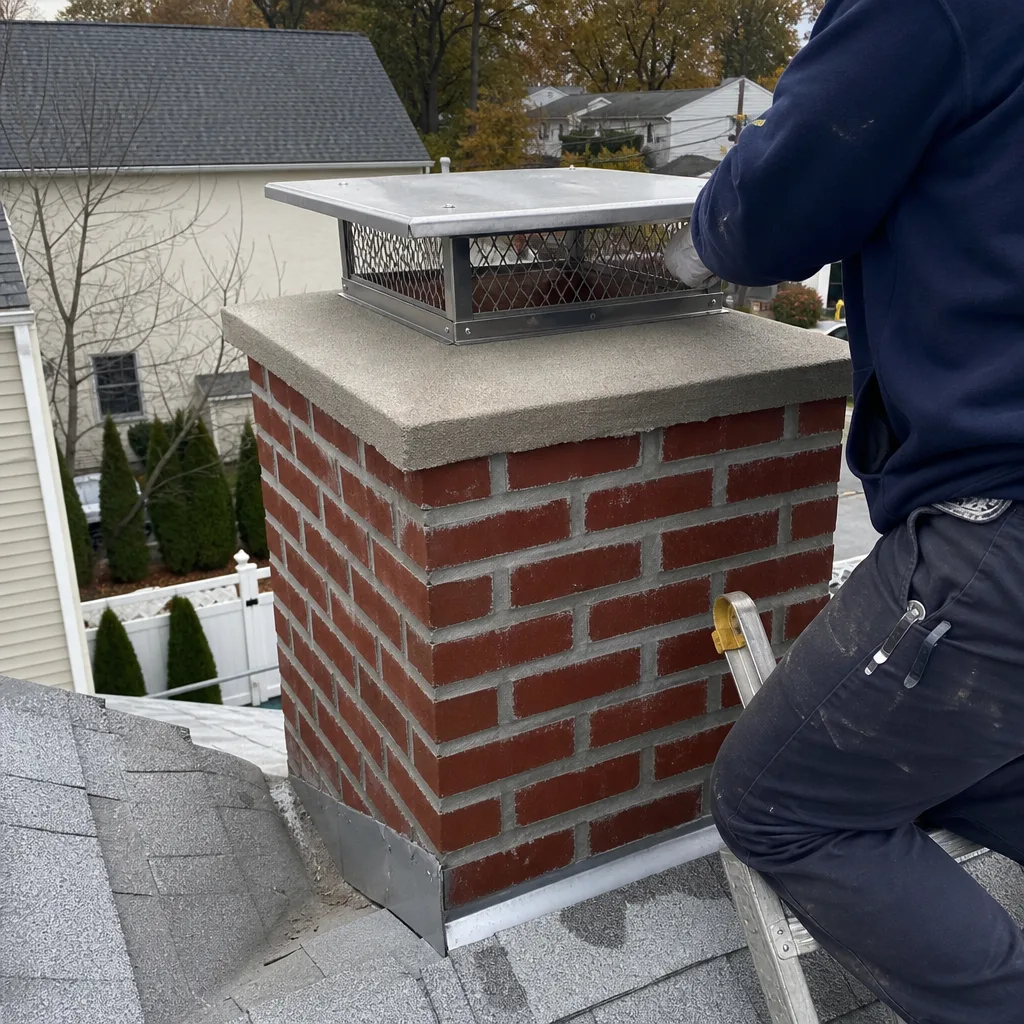 After
After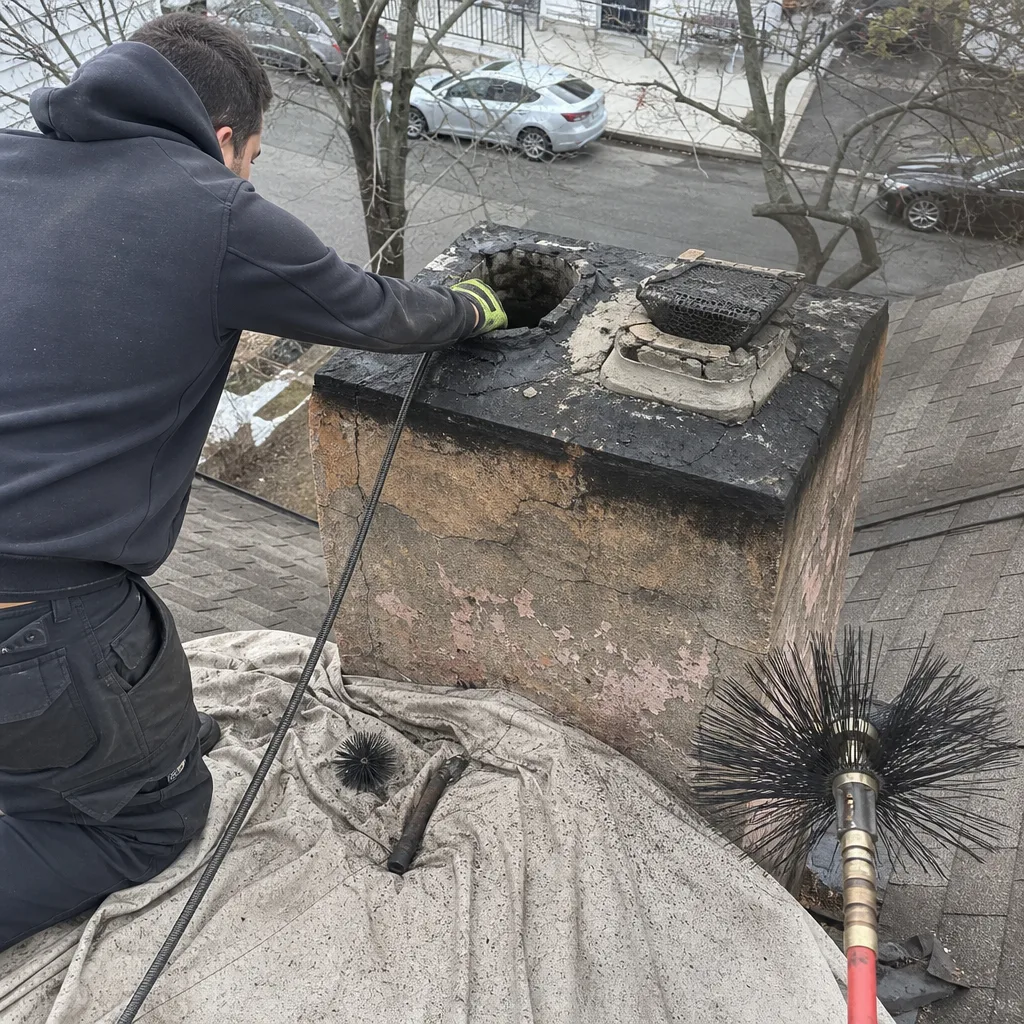 Before
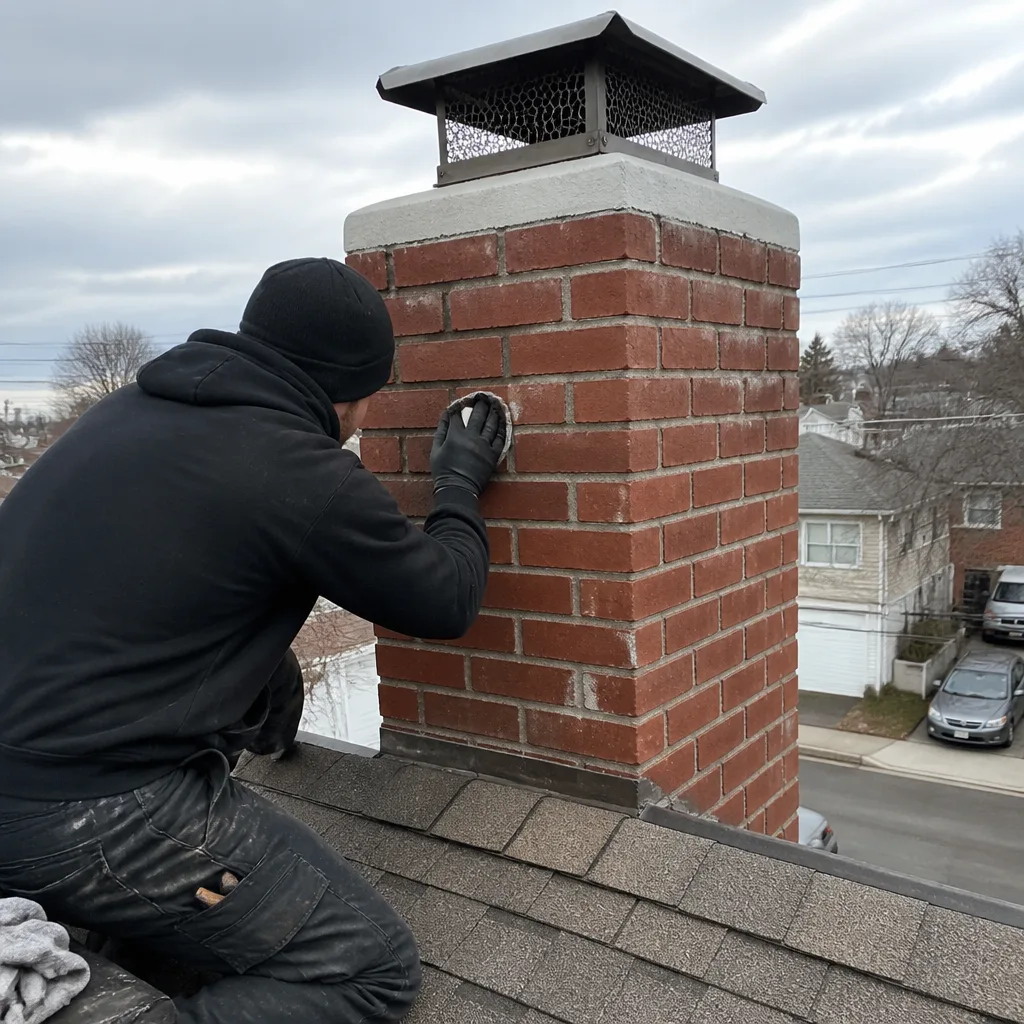 After
After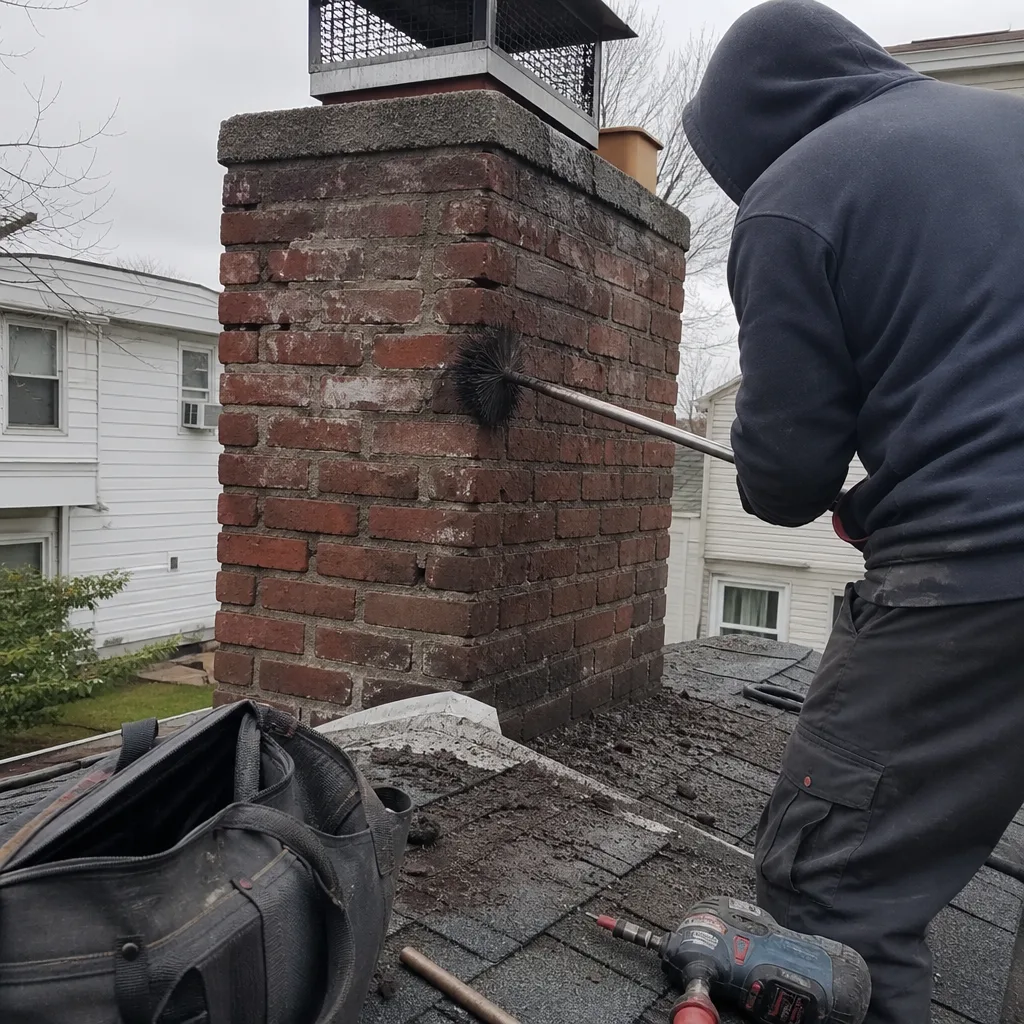 Before
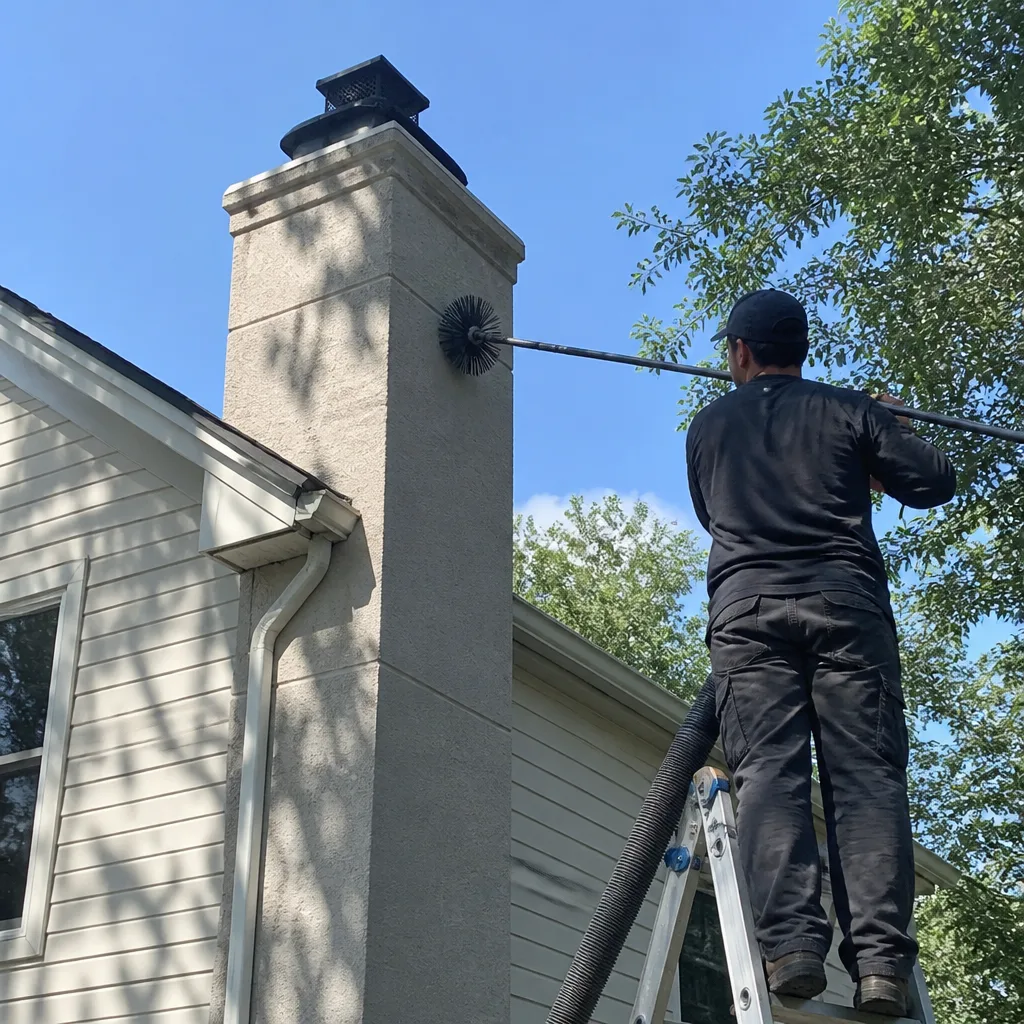 After
AfterChimney Cleaning Permits, Codes & Inspections in NY: What You Need to Know
Here’s the distinction that costs homeowners thousands at closing: chimney cleaning and sweeping in Staten Island never requires a permit, but the repairs that cleaning reveals almost always do. We’ve seen it repeatedly in neighborhoods like Tottenville and Great Kills - a liner replacement done without Department of Buildings filing, discovered years later when a buyer’s inspector pulls the property records. The work was solid, performed by a competent sweep even, but the permit gap kills the deal or triggers a costly retroactive filing. Our Complete Guide to Chimney Cleaning in Staten Island draws the line clearly between maintenance and alteration under New York City code, shows you exactly when paperwork enters the picture, and explains how to protect yourself whether you’re staying put or selling soon.
Quick Answer
Chimney cleaning and sweeping are classified as routine maintenance under NYC Building Code Chapter 28 and do not require a permit. However, liner replacement, firebox rebuilds, smoke chamber repairs, structural crown work, and any alteration to the chimney’s venting capacity or exterior dimensions trigger a Department of Buildings filing. In Staten Island, these permits are typically handled as Type 2 (no work type) or Type 1 (alteration) applications, with most residential chimney work falling under the $25,000 threshold that would trigger additional plan review.
Table of Contents
- Maintenance vs. Alteration: Where NYC Draws the Line
- NYC Building Code Chapter 28 and Chimney Work
- When a Simple Sweep Turns Into a Permitted Repair
- Local Law 11 and Your Chimney Exterior
- NFPA 211, Inspection Documentation, and Insurance
- How to Check Prior Chimney Work in the NYC DOB BIS Portal
- The Staten Island Permit Process: What Actually Happens
- Common Mistakes to Avoid
- When to Call a Professional
- Frequently Asked Questions
- The Bottom Line
Maintenance vs. Alteration: Where NYC Draws the Line
The New York City Building Code makes a clean distinction that many sweeps gloss over, and homeowners pay for the confusion later. Maintenance - cleaning, sweeping, minor mortar joint repointing under 25% of the chimney face, cap replacement of like-for-like dimensions - is exempt from permit requirements. Alteration - anything that changes the structure, venting capacity, fuel type, or exterior dimensions - requires Department of Buildings approval.
We’ve been sweeping chimneys in Staten Island since 1984, and warning signs we see each winter play out the same way. A homeowner in Westerleigh schedules a routine cleaning. We run the camera and find a clay liner shattered by thermal shock, common in older homes where decades of oil heat have cycled the flue aggressively. The liner needs replacement. The homeowner, understandably, asks whether this is part of the cleaning. It’s not. And it requires a permit.
The specific triggers under Chapter 28 include:
- Any liner replacement or relining that changes material, diameter, or insulation value
- Firebox rebuilds exceeding 25% of the facing surface area
- Smoke chamber parging or modification that alters the draft geometry
- Crown replacement that extends beyond original dimensions or changes slope
- Structural repairs to the chimney breast or foundation
- Conversion between fuel types (wood to gas, oil to pellet, etc.)
- Installation of new inserts or stoves requiring new venting connections
The 25% threshold is the practical hinge point. Repoint a few deteriorated joints in a Rosebank row house? Maintenance. Rebuild the entire firebox after a chimney fire in New Dorp? Alteration, permit required. A conscientious sweep should flag this transition before work begins, explain the filing requirement, and either handle the paperwork or refer you to a filing agent. At Hearthstone Chimney Co. home, we handle the permit coordination ourselves for any job we perform that crosses this line - it’s part of the estimate conversation, not a surprise that emerges mid-project.
The financial stakes are real. Unpermitted liner work discovered during a home inspection typically triggers one of three outcomes: the seller must obtain a retroactive permit (often requiring exposed inspection and possible rework), the buyer negotiates a credit equal to the estimated cost of proper permitting and verification, or the deal stalls entirely while title issues are resolved. In Staten Island’s market, where attached and semi-attached homes dominate and buyers are particularly attuned to facade and chimney condition, this is not a theoretical risk.
NYC Building Code Chapter 28 and Chimney Work
Chapter 28 of the NYC Building Code governs mechanical systems, and Section MC 211 specifically addresses chimneys, vents, and solid fuel-burning appliances. For homeowners, the relevant provisions cluster around three concepts: proper venting capacity, approved materials, and separation distances from combustibles.
The code adopts NFPA 211 by reference, which means the national standard becomes enforceable local law. But NYC adds its own layers. The city requires that any chimney serving a solid fuel appliance maintain a minimum flue size calculated on the appliance’s rated output, not merely the existing opening. This matters in Staten Island’s pre-war housing stock, where original fireplaces were often built for coal and later converted to wood or oil without proper flue resizing.
Material approvals are another NYC-specific layer. The code maintains a list of acceptable liner materials and installation methods. Stainless steel liners from manufacturers like Chimney Repair in Staten Island suppliers must carry appropriate UL listings. Cast-in-place systems like HeatShield require certified installer status. We’ve encountered homeowners in St. George whose previous sweep installed a generic flexible liner without proper clearances - it passed a casual look but failed when we measured against code requirements for the specific appliance connection.
The combustion clearance rules are particularly relevant in Staten Island’s older homes. Original construction often placed wooden lath and plaster within inches of the chimney breast. Code requires minimum air space or proper insulation barriers, and achieving compliance in a 1920s Colonial in Todt Hill without visible interior disruption requires experience with the available remediation products. We typically specify proper clearance solutions using materials from Olympia Chimney and Famco, whose components are listed for these specific applications.
One underappreciated provision: Chapter 28 requires that chimney terminations (the visible top) maintain minimum heights above roof planes and adjacent structures. A cap replacement that extends the flue height to achieve proper draft may seem minor, but if it alters the termination geometry beyond original design, it technically requires filing. In practice, small height adjustments using listed cap assemblies are often handled as maintenance, but significant extensions - common when second-story additions change rooflines in Arden Heights or Eltingville - cross into alteration territory.
When a Simple Sweep Turns Into a Permitted Repair
The transition from maintenance to alteration usually happens in one of four ways during a routine service call. Understanding these pathways helps you anticipate costs and timeline changes before the technician is standing in your living room.
Scenario 1: The Hidden Liner Failure
Clay tile liners deteriorate predictably in coastal climates. Staten Island’s freeze-thaw cycles, amplified by salt air penetration, accelerate spalling and cracking. During a Level 2 camera inspection - part of our standard maintenance checklist for Staten Island homeowners - we document liner condition throughout the flue on every initial visit and periodically thereafter. Hairline cracks in isolated tiles may be monitorable. Shattered sections, missing tiles, or gaps at joints typically trigger replacement recommendations.
Liner replacement is always a permitted alteration in NYC. The filing establishes that the new liner’s material, diameter, and insulation value match the appliance being served. Stainless steel systems from DuraFlex or Copperfield require specific gauge and alloy specifications depending on fuel type and flue temperature. The permit process verifies these selections against code.
Scenario 2: The Deteriorated Smoke Chamber
The smoke chamber - the area above the firebox that funnels smoke into the flue - is often constructed of corbeled brick with a parged interior surface. In Staten Island homes built before 1960, this parging is frequently eroded or was never properly applied, leaving rough brick that accumulates creosote and disrupts draft. Chamber repair using proper refractory materials restores smooth surfaces and proper geometry.
Because smoke chamber modification affects venting performance, it requires permit filing. The work must be documented with before-and-after dimensions, and in some cases, a progress inspection is required if the chamber is being significantly reshaped.
Scenario 3: Firebox Rebuild After Chimney Fire
Chimney fires in wood-burning systems are more common in Staten Island than many homeowners realize, particularly in neighborhoods like Huguenot and Annadale where mature trees provide abundant free fuel and fireplaces see heavy seasonal use. Thermal damage to firebrick, mortar, and surrounding structure often exceeds what casual inspection reveals.
Rebuilding more than 25% of the firebox surface triggers alteration classification. The permit ensures proper materials (refractory mortar, not standard Type N), proper clearances to combustibles, and proper throat damper integration. We’ve rebuilt fireboxes where previous “repairs” used standard Portland cement that failed within two heating seasons - the permit process, properly executed, prevents this category of error.
Scenario 4: Fuel Conversion
Converting a wood fireplace to gas insert, or oil appliance to pellet stove, always requires permit filing. The venting requirements differ fundamentally between fuel types, and the code treats these as system alterations rather than appliance swaps. This is a common source of unpermitted work - the homeowner sees it as “just putting in a new insert,” but the venting modification is substantial.
The proper sequence is: appliance selection, venting design, permit filing, installation, inspection. Skipping the permit step may not cause immediate problems, but it surfaces at property transfer or insurance claim time.
Local Law 11 and Your Chimney Exterior
Local Law 11 of 1998, formally the Facade Inspection Safety Program (FISP), requires periodic inspection of building exteriors for all structures over six stories. While this directly affects few Staten Island residences, its provisions create important indirect effects for chimney work - and one direct application that surprises many homeowners.
For buildings under six stories, Local Law 11 does not mandate inspection cycles. However, the engineering standards it establishes for facade safety, parapet stability, and element anchorage are referenced in DOB enforcement actions when chimney exteriors show deterioration. A leaning chimney, spalling brick, or deteriorated crown on a two-story attached home in Port Richmond may not trigger FISP filing, but it can trigger a DOB violation if reported or observed during other permitting.
The direct application: any chimney work that affects the building exterior on an attached or semi-attached structure must consider party wall implications. In Staten Island’s dense North Shore neighborhoods - St. George, Tompkinsville, Stapleton - chimneys often serve as party wall elements or terminate in close proximity to adjacent structures. Exterior modifications that change dimensions, add support brackets, or require scaffolding penetration of adjacent air rights may need additional approvals beyond standard chimney permits.
We’ve encountered situations in West Brighton where a straightforward crown replacement required coordination with an adjoining owner because the scaffolding bracket placement affected their roof edge. The work was simple; the property line geometry was not. A sweep unfamiliar with Staten Island’s block-and-lot patterns might proceed without this coordination, creating neighbor disputes or, in worst cases, stop-work orders.
The practical implication for homeowners: if your chimney shares a wall line or terminates within a few feet of your property boundary, confirm that your contractor understands party wall considerations before work begins. This is standard in our estimating process for any North Shore or Mid-Island attached home.
NFPA 211, Inspection Documentation, and Insurance
The National Fire Protection Association Standard 211, “Chimneys, Fireplaces, Vents, and Solid Fuel-Burning Appliances,” is incorporated by reference into NYC Building Code and carries independent weight with insurance carriers. Understanding its documentation requirements helps you navigate claims and maintain coverage.
NFPA 211 establishes three inspection levels:
- Level 1: Visual inspection of readily accessible portions, appropriate for annual maintenance of systems with no changes and no known problems. This is what many sweeps perform, and it is insufficient for property transfer or post-event evaluation.
- Level 2: Video scanning of internal flue surfaces, accessible exterior evaluation, and inspection of connections and clearances. Required at property sale, after chimney fire, after weather event, or upon appliance change. This is our standard for every initial Staten Island customer and for all annual customers with active wood-burning systems.
- Level 3: Demolition inspection when concealed hazards are suspected. Rarely needed, but essential when Level 2 reveals indicators of hidden damage.
The documentation standard matters for insurance. After a chimney fire, your carrier will request inspection records. If the most recent documentation is a handwritten receipt saying “swept and inspected,” you may face coverage challenges. If you have dated video footage, annotated photos, and a written condition assessment, the claim process moves more smoothly.
We’ve worked with Staten Island homeowners in Oakwood and New Dorp whose chimney fire claims were initially questioned due to sparse maintenance records. In each case, our Level 2 documentation from prior visits established pre-event condition and proper maintenance, supporting coverage determination. The inverse is also true: we’ve documented neglected systems where carrier denial was appropriate and predictable.
The intersection with permits is this: insurance adjusters increasingly cross-reference DOB filings when evaluating claims involving structural chimney work. A liner failure claim where the liner was replaced without permit may be challenged on the basis that unpermitted work voids policy terms. This is carrier-specific, but the trend is clear. Permitted work, properly documented, provides a cleaner claims pathway.
Our inspection reports include: dated video of full flue length, photographs of accessible exterior conditions, clear statement of recommended actions with priority ranking, and reference to applicable code sections. We keep these records indefinitely. For Fireplace Services in Staten Island customers with active systems, we maintain annual comparison documentation that tracks condition changes over time.
How to Check Prior Chimney Work in the NYC DOB BIS Portal
The NYC Department of Buildings Building Information System (BIS) maintains public records of all permits, inspections, and violations. For homeowners buying or selling in Staten Island, or for long-term owners verifying past work, this portal is the authoritative source.
Step-by-Step BIS Search Process
- Navigate to the NYC DOB BIS portal at a2z.nyc.gov (the modernized interface) or the legacy BIS system.
- Enter your property’s Borough-Block-Lot (BBL) number. For Staten Island properties, the borough code is 5. You can find your BBL on your property tax bill, deed, or through the NYC Finance ACRIS system.
- Select “Jobs/Filings” from the property record menu to view all permit applications associated with your lot.
- Filter by job type: chimney work typically appears under “Mechanical” (ME) filings for liner and venting work, or “Alteration Type 2” (ALT2) for structural repairs. Recent filings may use the newer “Build” system reference numbers.
- Review job details for description, applicant information, and inspection status. Approved jobs show sign-off dates; open jobs may indicate pending inspections or incomplete work.
- Check “Violations” separately - unpermitted work discovered by DOB inspectors or reported complaints appear here as “ECB” (Environmental Control Board) violations or DOB violations.
What you’re looking for: any job description containing “chimney,” “liner,” “fireplace,” “vent,” or “solid fuel.” The filing should list a licensed filing representative (architect or engineer) and a licensed contractor. For work performed after 2008, the contractor should appear in the DOB’s licensed contractor database with active status.
Common gaps we find in Staten Island records: liner replacements performed by sweeps who filed under general maintenance categories or not at all; firebox rebuilds where the contractor pulled a general renovation permit without specific chimney scope; and crown replacements treated as “roofing” work without mechanical filing. These filing errors create the permit gaps that surface at closing.
If you find no record of work you know was performed, the next step depends on your situation. For current owners considering sale, retroactive filing may be possible with proper documentation of work performed. For prospective buyers, the absence of permits for visible chimney work is a due diligence item to address in negotiation. In either case, a current Level 2 inspection establishes present condition independent of past filing status.
We maintain copies of all permits we file for our Staten Island customers and provide these upon request for property transfer documentation. If you’re uncertain about past work on a home you’re considering, we offer free second opinions on any written estimate or inspection report - including verification of whether recommended work actually requires permitting.
The Staten Island Permit Process: What Actually Happens
For the typical Staten Island homeowner, the permit process for chimney work is less cumbersome than reputation suggests, but it requires sequential steps that add time to project scheduling. Understanding the timeline helps set realistic expectations.
Most residential chimney alterations in Staten Island fall into two categories:
- Type 2 (No Work Type): For liner replacements, cap installations, and similar mechanical work that doesn’t affect structural elements or building use. These typically require a licensed plumber or oil burner installer to file, or a registered architect/engineer for more complex scope. Approval is typically 3-5 business days for straightforward applications.
- Type 1 (Alteration): For structural repairs, firebox rebuilds, or work affecting building egress or safety systems. Requires architect or engineer filing, plan submission, and longer review. Timeline extends to 2-4 weeks depending on DOB backlog.
The practical sequence for a typical liner replacement in a Great Kills or Tottenville home:
- Inspection and scope definition (our visit, Level 2 documentation)
- Material specification and estimate (including permit coordination fee)
- Permit application preparation and filing (we coordinate with our filing agent)
- DOB review and approval (3-5 days for Type 2)
- Work scheduling and execution (typically single visit for liner replacement)
- DOB inspection scheduling and completion (we coordinate, homeowner need not be present for exterior-access work)
- Sign-off and final documentation delivery
Staten Island’s DOB operations are managed through the borough office and plan examination facilities in Manhattan. While this creates some logistical complexity compared to jurisdictions with local permitting, experienced filing agents handle the coordination routinely. We include this coordination in our project management for any permitted job - the homeowner’s practical involvement is typically limited to providing access for inspection.
Costs are modest relative to project value: filing fees for Type 2 chimney work typically run $200-400, with additional fees for plan preparation if engineering drawings are required. We disclose these costs upfront in our estimates, with no markup on municipal fees. The alternative - unpermitted work discovered later - costs substantially more in stress, negotiation, and potential rework.
One Staten Island-specific consideration: properties in designated historic districts or with landmark status require additional Landmarks Preservation Commission review for exterior-visible chimney modifications. This affects a limited number of homes, primarily in St. George and parts of West New Brighton, but adds 2-3 weeks to approval timelines when applicable. We identify this requirement during initial scope review when address screening indicates potential landmark status.
Common Mistakes to Avoid
- Assuming your sweep handles permits automatically. Many operate strictly in the maintenance category and have no filing capability. Ask directly: “Will you pull the permit for this liner replacement, or do I need to coordinate separately?” If they hesitate or deflect, that’s information.
- Treating “no permit needed” as a selling point. A sweep who advertises permit-free service for work that clearly requires filing is either ignorant of code or indifferent to your future liability. Either way, not your problem until it becomes your problem.
- Neglecting to verify prior work when buying. In Staten Island’s competitive market, buyers sometimes waive inspection contingencies. At minimum, run the BIS search described above for any home with visible chimney work. The ten minutes online can save ten thousand in surprises.
- Confusing “inspected” with “permitted.” A sweep can inspect your chimney thoroughly, provide excellent documentation, and perform quality work - all without ever filing a permit. The permit is a separate administrative act. Verify it independently.
- Ignoring Local Law 11 implications on attached homes. Even if your building is under six stories, exterior chimney work that affects party wall stability or adjacent property can trigger neighbor disputes or DOB complaints. Coordinate with adjoining owners when work extends beyond your lot line.
- Discarding maintenance records. NFPA 211 documentation, even for routine sweeps, supports insurance coverage and establishes maintenance history. Keep records for the life of your ownership, and transfer them to buyers at sale.
- Accepting verbal assurances about code compliance. “It’s fine, we’ve done hundreds” is not documentation. Request written scope, material specifications, and permit filing confirmation before work proceeds.
When to Call a Professional
Call for a Level 2 inspection before burning season if your chimney hasn’t been evaluated in two or more years, if you’ve noticed draft problems or smoke spillage, or if you’re preparing to list your Staten Island home for sale. Call immediately if you’ve experienced a chimney fire, even one that self-extinguished - thermal damage often hides from casual observation. And call for a free second opinion if you’ve received a recommendation for extensive work that seems disproportionate to the problem described.
Hearthstone Chimney Co. offers free estimates in Staten Island - call (516) 613-3035 - and publishes more guides & resources to help homeowners maintain safe systems. Our technicians are background-checked and uniformed, most jobs complete in a single visit, and we provide no-hassle upfront pricing with the number on the estimate matching the number on the invoice. Every inspection includes photos you can see and a plain-English verdict. Work that requires permitting is identified before any commitment, and we handle the filing coordination ourselves. The 90-Day Done Right Promise covers everything we do - in writing, no arguing.
Frequently Asked Questions
No. Chimney cleaning and sweeping are classified as routine maintenance under NYC Building Code Chapter 28 and do not require Department of Buildings filing. However, if the cleaning reveals damage requiring liner replacement, firebox rebuild, or other alteration, that subsequent repair work typically does require permitting. Call (516) 613-3035 for a free estimate if you’re uncertain where your project falls.
Most residential stainless steel liner replacements in Staten Island range from $2,800 to $5,500 depending on flue height, diameter, number of appliance connections, and whether insulation is required for exterior chimney applications. This includes permit filing and coordination, Level 2 inspection documentation, and materials from listed manufacturers. We use components from Gelco and Copperfield, specified to your system’s requirements. Call (516) 613-3035 for an exact quote - estimates are free.
Search the NYC DOB BIS portal using your property’s Borough-Block-Lot number (borough code 5 for Staten Island). Look for mechanical or alteration filings with chimney-related descriptions. Approved jobs show sign-off dates and contractor information. If you find no records for work you know was performed, or if descriptions seem miscategorized, a current Level 2 inspection can establish present condition and identify any code compliance gaps. We provide this verification service and can review prior estimates or reports at no charge.
The specific consequences depend on when the work was performed, what it involved, and how diligent the buyer’s inspector and attorney are. Common outcomes include: required retroactive permitting with possible exposed inspection, buyer credit requests covering estimated compliance costs, or title insurance exceptions that complicate financing. In Staten Island’s market, where attached homes and thorough inspections are common, unpermitted chimney work is a recurring sale complication. Addressing it proactively, before listing, is almost always less costly than negotiating under contract pressure.
For wood-burning systems, NFPA 211 recommends annual inspection and cleaning as needed based on creosote accumulation. In practice, Staten Island homeowners burning seasoned hardwood 2-3 times weekly typically need annual sweeping. Oil and gas systems should be inspected annually but often require less frequent cleaning - every 2-3 years for gas, annually for oil due to soot production. The specific schedule depends on fuel type, burn frequency, and appliance efficiency. Our Level 2 inspection includes creosote measurement and burn pattern analysis to recommend appropriate intervals for your actual usage.
Accumulated creosote creates chimney fire risk - not theoretical risk, but documented ignition at temperatures above 1,000°F that can damage liners, surrounding structure, and potentially spread to the building. Blocked or deteriorated flues can cause carbon monoxide spillage into living spaces, particularly dangerous in Staten Island’s older homes with original construction that may lack modern air sealing. Deferred maintenance also converts addressable problems into expensive repairs: a cracked tile liner that might have been replaced cleanly becomes a structural rebuild after thermal damage propagates. The cost of annual inspection and cleaning is modest compared to these outcomes. Call (516) 613-3035 to schedule before the fall burning season fills our calendar.
The Bottom Line
Chimney cleaning requires no permit in New York. The repairs that cleaning reveals frequently do, and the distinction between maintenance and alteration is where homeowners get caught. In Staten Island’s housing market - older stock, attached construction, attentive buyers - unpermitted chimney work surfaces at the worst possible moment, typically during property transfer. Protect yourself by understanding the code boundaries, verifying past work through the DOB BIS portal, and demanding that any sweep crossing into alteration territory handle permits properly or explain clearly why they won’t. Documentation matters: dated inspection records, permitted work, and written guarantees. At Hearthstone Chimney Co., we’ve built our practice on doing the thing correctly - photos you can see, a plain-English verdict, permits handled when required, and the 90-Day Done Right Promise backing every job. No flash, no shortcuts, just the work done right.
Written by Russell Haines, Owner at Hearthstone Chimney Co., serving Staten Island since 2014.